
Flea and tick treatment in Newcastle
Fleas are a house pest that arrives on a pet. Ticks are a yard pest that waits at the vegetation line. They get grouped together because both bite and both turn up more in the warm months, but they are two different jobs, and this page is honest about which is which. It also tells you the thing most people learn too late: the fleas you can see are the small end of the problem.
The sign you actually saw
- Bites around the ankles and lower legs
- Fleas jump from the floor, so a person's bites cluster low: ankles, shins, the backs of the knees. They come up as small hard red spots, often in a little run of two or three. Bites higher up the body are usually something else.
- The pet scratching at the base of the tail
- The rump and tail base is where fleas concentrate on a cat or dog. A pet chewing and scratching there, or thinning fur over the lower back, is the classic first sign, often before anyone in the house gets bitten.
- Black pepper specks in the pet's coat or the bedding
- This is flea dirt, which is digested blood. Brush some onto a damp piece of white paper and if the specks smear rusty red, it is flea dirt and there are fleas. It is the surest home check there is.
- Tiny dark insects hopping in the carpet or off your socks
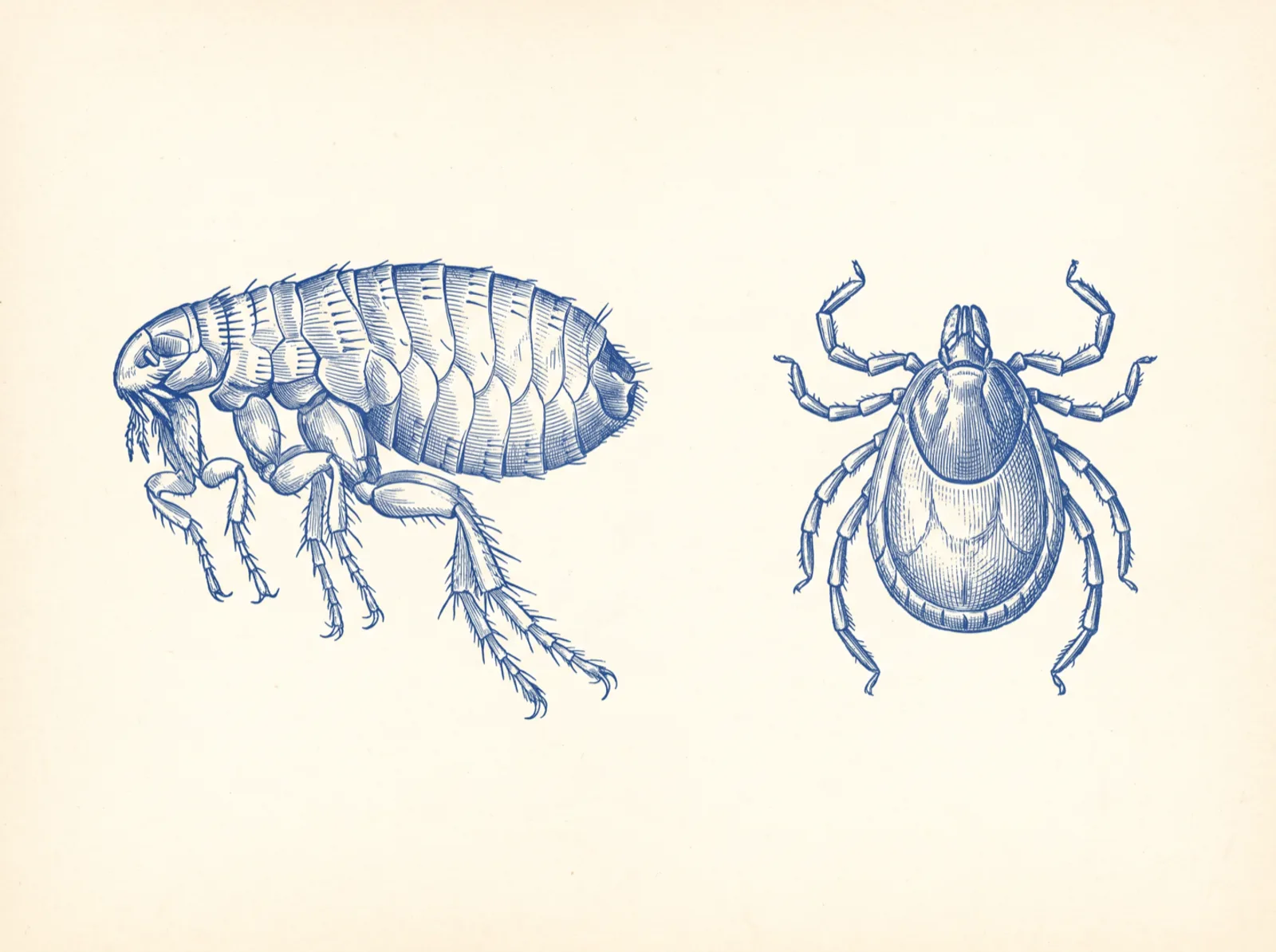
- Adult fleas are about the size of a comma, dark and quick, and they spring rather than crawl. You tend to see them against pale carpet, a rug or bare skin, most often in a room the pet sleeps in.
- A tick found attached, usually after a bush walk
- A tick is a different animal: bigger, round, slow, and fixed in one spot with its head under the skin. They are picked up outside in scrub and long grass, most often on a dog, and they do not breed in the carpet the way fleas do. The section below is about them specifically.

Why the fleas you can see are the small end of it
The fleas hopping in your carpet are the adults, and the adults are the minority. Most of a flea population is not fleas yet: it is eggs, larvae and pupae worked down into the carpet pile, the pet's bedding, the cracks between floorboards and the subfloor. An adult flea lays her eggs on the animal, the eggs are not sticky, and they rain off wherever the pet walks, sleeps and lies. The house becomes the nursery; the pet is just the delivery van.
That is the whole reason a single spray or a supermarket flea bomb disappoints. It kills the adults on the day and does nothing to the eggs and the armoured pupae waiting in the pile. Pupae are the stubborn stage: they can sit dormant for weeks and hatch when they sense warmth and movement, which is why a house can seem clear and then bloom again a week later. It is also normal to see more fleas for a few days after a proper treatment, as that warmth and movement draws the last pupae out onto treated surfaces.
The Hunter's warm, humid summer is the accelerant. Fleas breed fastest in warm damp conditions, so the population that ticked along quietly through winter builds quickly from spring and peaks across December to March. It is the same coastal humidity that keeps our subfloors and carpets damp; the fleas simply take advantage of it. Get in front of it before the warm run and the job is smaller.
What actually clears a flea infestation
A flea job that holds has four parts, and it is a partnership: we treat the house, your vet treats the animal, and the vacuuming in between is yours. Skip any one and it bounces back.
Prepare: vacuum, wash, clear the floor
Before we arrive, vacuum thoroughly, edges and under furniture included, and empty the vacuum straight into the outside bin. The vibration coaxes pupae to hatch so the treatment reaches them, and the suction lifts eggs and flea dirt out of the pile. Wash the pet's bedding on the hottest cycle it will take. This step is not busywork; it is doing half the job for free.
Treat the whole environment, not one room
We treat where the life cycle lives: carpets, rugs, the edges and skirting, floorboard cracks, pet resting areas and the subfloor if the fleas are working up from under the house. The treatment is chosen to hit the adults and to interrupt the eggs and larvae so the cycle cannot restart. We describe methods generically and quote each house on what it actually has.
Treat the pet, through your vet
We treat the house, not the animal. On-animal flea control is a veterinary matter, and your vet will match a product to the pet's size, age and health. Doing one without the other is the single most common reason fleas come back: a treated house re-seeds from an untreated pet, or a treated pet keeps picking up hatchlings from an untreated house. Both, near the same time, is the fix.
Ride out the hatch, then it settles
Because pupae keep hatching for a while, the honest picture is a fall over days, not an overnight zero, and sometimes a brief rise first. Keep vacuuming across that window. Where a house needs a follow-up to catch a heavy pupae load, we say so up front rather than pretend one visit ends it.
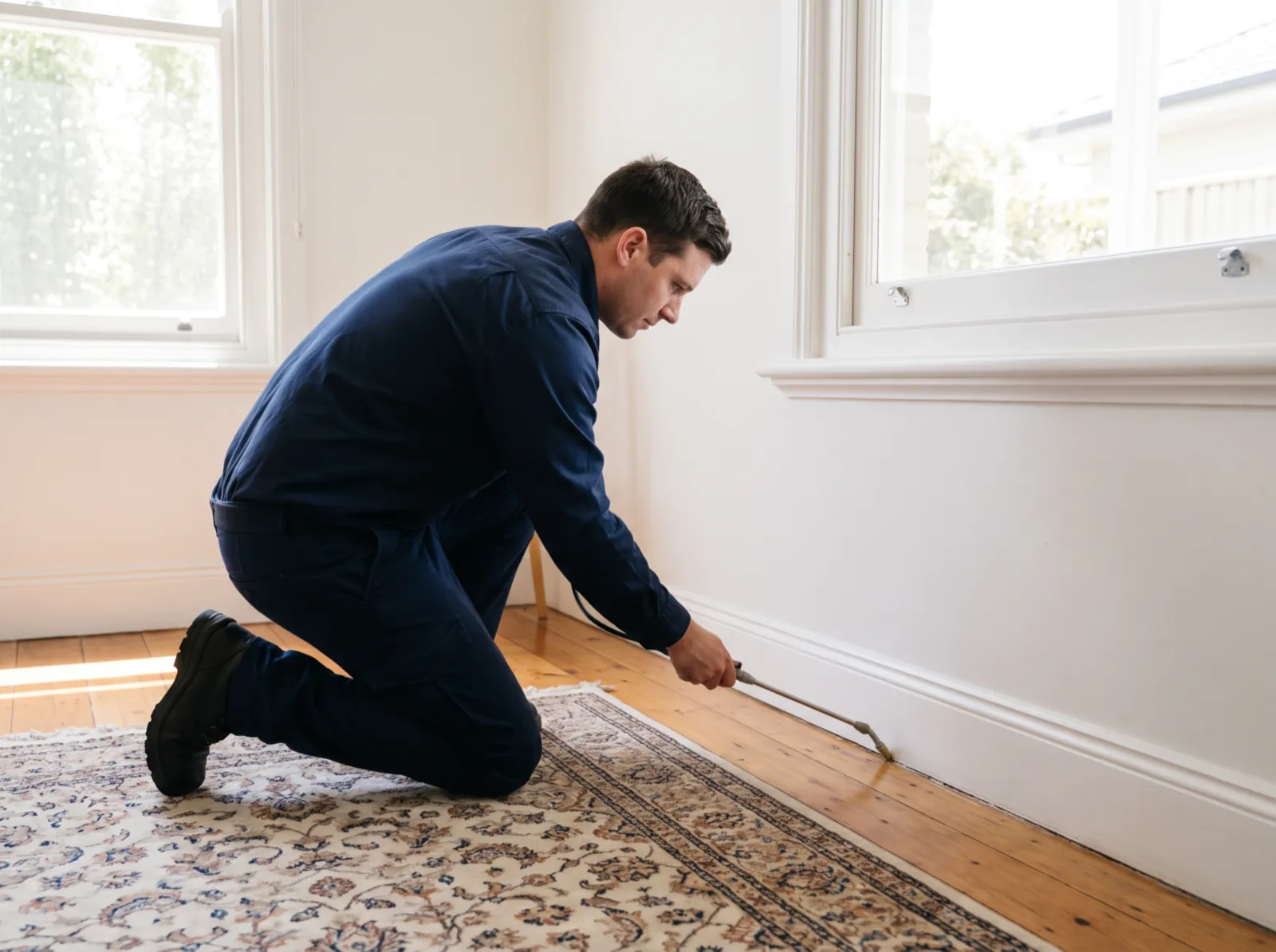
Illustrative photo. Methods described generically; every job is quoted on what your house needs. On-animal treatment is a matter for your vet.
Ticks are a yard-edge job, and we will not oversell it
Ticks do not live in your carpet and they do not breed indoors. The paralysis tick, the one that matters most on this coast, waits in moist bushy ground, long grass and leaf litter, then latches onto whatever brushes past, usually a dog nosing along the fence line or the bush edge. It is a real concern for pets in coastal NSW, which is exactly why on-animal tick prevention and a hands-on tick check after every walk are worth the habit.
Our part is the yard edge. We work the vegetation line, the long grass against the fence, and the shaded damp margins where the pet pushes through, and that pulls the tick pressure coming off your own ground right down. What we will not honestly promise is a tick-free yard, especially a bush-fringe block at Wallsend, Fletcher or out around Port Stephens where the reserve is the neighbour. The bush keeps restocking the boundary, so a yard treatment lowers the odds; it does not replace what your vet and your own tick checks do on the animal.
The honest fine print
Moving out with a pet? A lot of Hunter leases ask for a flea treatment at the end of a tenancy where an animal was kept, and agents often want a receipt for the bond file. Time it with the final clean, after the carpets are done and the furniture is out, so nothing re-seeds a treated floor. The end-of-lease treatment page covers how that works, and the renting guide covers whose job it is.
Pets and the treated floor. Keep cats, dogs, and especially fish tanks and bird cages in mind: we will tell you which areas to keep pets off and for how long, and how to prepare a tank or aviary before we arrive. Tell us the whole menagerie in the enquiry and the plan is built around it.
No pets, but fleas? It happens. A previous tenant's cat, a possum or rats living in the subfloor, or a stray sheltering under the house can all leave a flea population behind that starts biting the new humans. We work out the source rather than just spraying the symptom.
The DIY bomb usually backfires. A supermarket fogger drops a mist that never reaches into the pile or the subfloor where the eggs and pupae are, and the propellant can scatter fleas into rooms that were fine. It kills the fleas you could already see and leaves the ones you could not.
Asked every summer
I am getting bitten but my pet seems fine. How?
Common, and it is about tolerance, not absence. A pet that has carried fleas a while can stop reacting much, while a fresh human ankle is an easy new meal. Do the damp-paper flea dirt check on the pet's rump. If it smears red, the fleas are there whether the animal is scratching or not.
Can you just get rid of the ticks in my yard?
We treat the yard margins and knock the harbourage right back, which lowers the pressure. On a bush-fringe block we will not promise tick-free, because the reserve keeps restocking the boundary. The honest package is yard-edge treatment from us plus on-animal prevention and tick checks from your vet. Anyone promising a permanently tick-free bush block is overselling it.
Do I really have to vacuum, or can you just spray?
The vacuuming genuinely does a share of the work no spray can. It lifts eggs and flea dirt out, and the vibration triggers pupae to hatch so the treatment can reach them, instead of them sitting armoured and dormant. It is the cheapest, most effective half of the job, and it is the half only you can do.
Why are there more fleas a few days after you treated?
That is the pupae hatching, and it is expected, not a failure. New fleas emerge from the resistant pupal stage onto surfaces that are now treated, and the population falls from there. Keep vacuuming across that window. If it is not clearly settling within the timeframe we gave you, tell us.
How long until the house is clear?
It is a fall over days rather than an instant zero, because of the hatching cycle, so we will not sell you an overnight miracle. How long depends on how heavy the load was and whether the pet is being treated in step. We spell out the likely picture, and any follow-up, before you commit.
- NSW EPA, Pesticide licences. Flea treatment around a home is licensed pesticide use in NSW; this is the scheme that governs pest management technicians.
- The University of Sydney Veterinary Hospital, Fleas. Fleas spend much of the life cycle in the environment, in bedding and carpets, which is why environmental control alongside on-animal treatment is essential.
- NSW Health, Ticks. Paralysis ticks occur in humid, moist bushy areas; the reference for where they live and how bites are prevented.

Tell us what you have seen
A description and a suburb is enough. A licensed technician reads every enquiry, works out what the job needs, and comes back with a straight answer and a free quote. No obligation, no pressure.