
End of lease pest control in Newcastle
If you kept a pet on the lease, your agreement most likely asks for a flea treatment before you hand back the keys, and the agent will want a receipt for the bond file. It is the one pest job with a form attached. This page tells you when a treatment is actually required, what the agent is really asking for, and how to time it so the paperwork is done and nothing re-seeds a clean floor.
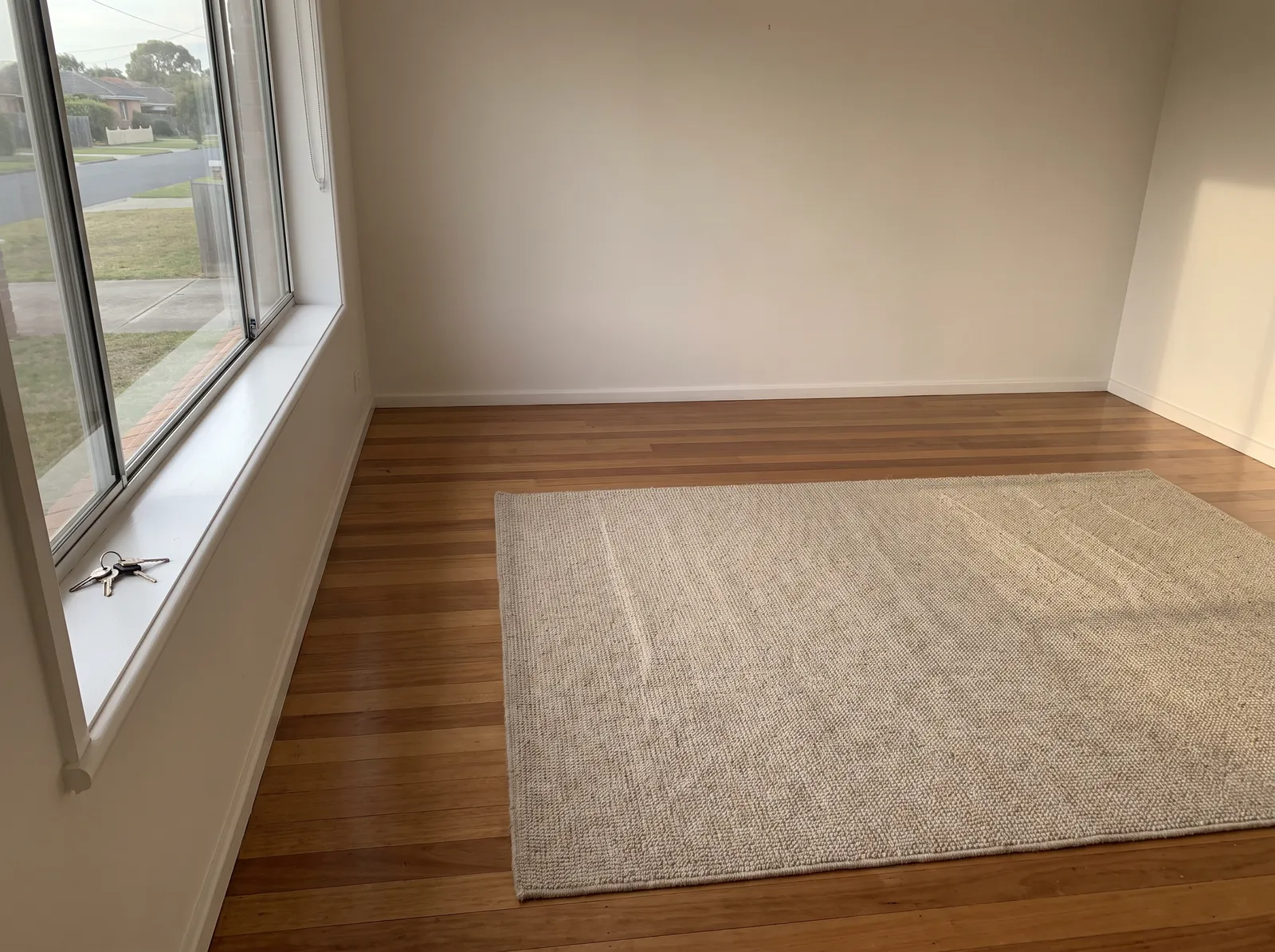
Read your lease for these
Not every tenant owes an end-of-lease treatment. In NSW it hangs on a specific written condition, not on a general feeling that you should. Check the consent letter and the lease for what actually applies.
- A pet was kept indoors, with the landlord's written consent
- This is the usual trigger. When a landlord agrees to an indoor pet, they can make an end-of-tenancy fumigation a condition of that consent, but only where the animal is a mammal kept inside. A cat, a dog, a rabbit indoors is the classic case.
- The consent response or lease lists "professional fumigation"
- The condition only binds you if it was set in writing when consent was given. If those words are there, the treatment must be done at the end of the tenancy, even if you cannot see a single flea. That is the trade for having been allowed the pet indoors.
- Carpets to be professionally cleaned
- A common companion condition, and a separate job from the flea treatment. The order matters: clean the carpets first, then treat the fleas onto a clean, dry floor. Doing it the other way round wastes the treatment.
- No pet, or a pet that lived outdoors only
- The fumigation condition generally does not apply. A landlord cannot require it just in case, and an exit checklist is not a lease. If there was never an indoor mammal, check the consent letter before you pay for a treatment you may not owe.
- A wasp nest, or rats in the roof you did not cause
- That is a different question. A pre-existing infestation, or one from a building fault, is usually the landlord's, not an end-of-lease tenant cost. Cause and timing decide it, and the renting guide covers the split.

What the agent is actually asking for
When an agent asks for "proof of flea treatment" they mean a receipt from a licensed pest operator, on the bond file, that a real treatment happened. It needs to name the property, the date it was treated, what was done, and that a licensed technician did the work. A hardware-shop bomb and a photo of an empty can does not do it; that is the whole reason the condition says professional.
We issue that receipt as standard, emailed once the work is done, and we will copy your agent directly if you give us their email in the enquiry. That way it lands in the file without you chasing it during the busiest week of a move.
Here is the honest limit, because it saves arguments later. The receipt proves the flea condition was met to the standard the lease asked for. It is not a guarantee your bond comes back. The bond turns on the whole property, not just the fleas, and that sits between you and the agent. What the receipt does is take the flea treatment off the table as a reason to hold any of it.
How it fits the final clean
The flea treatment is the last job, not the first. Get the order right and it is the easiest version of this work there is; get it wrong and you pay to do it twice.
Book it last, after the carpets and the clean
Furniture out, carpets professionally cleaned and dry, the final clean done, then the flea treatment goes down on a clean floor. Treat first and clean after and you have washed the treatment out. A dusty vacuum or a wet carpet clean over a treated floor is the same mistake. Last in, first proven.
Use the empty house to your advantage
An empty property treats faster and more completely than a lived-in one. The edges, the skirting, the gaps between floorboards and the subfloor are all reachable with nothing to move. Fleas live down in the pile and along those edges, so an empty room is exactly where a treatment does its best work.
Get the receipt in hand for the final inspection
We email the receipt once the job is done and copy your agent if you have asked us to, so the paperwork is sitting in the bond file before you hand the keys back. No treatment booked for the morning of the final inspection and no receipt to show is the avoidable version of this stress.
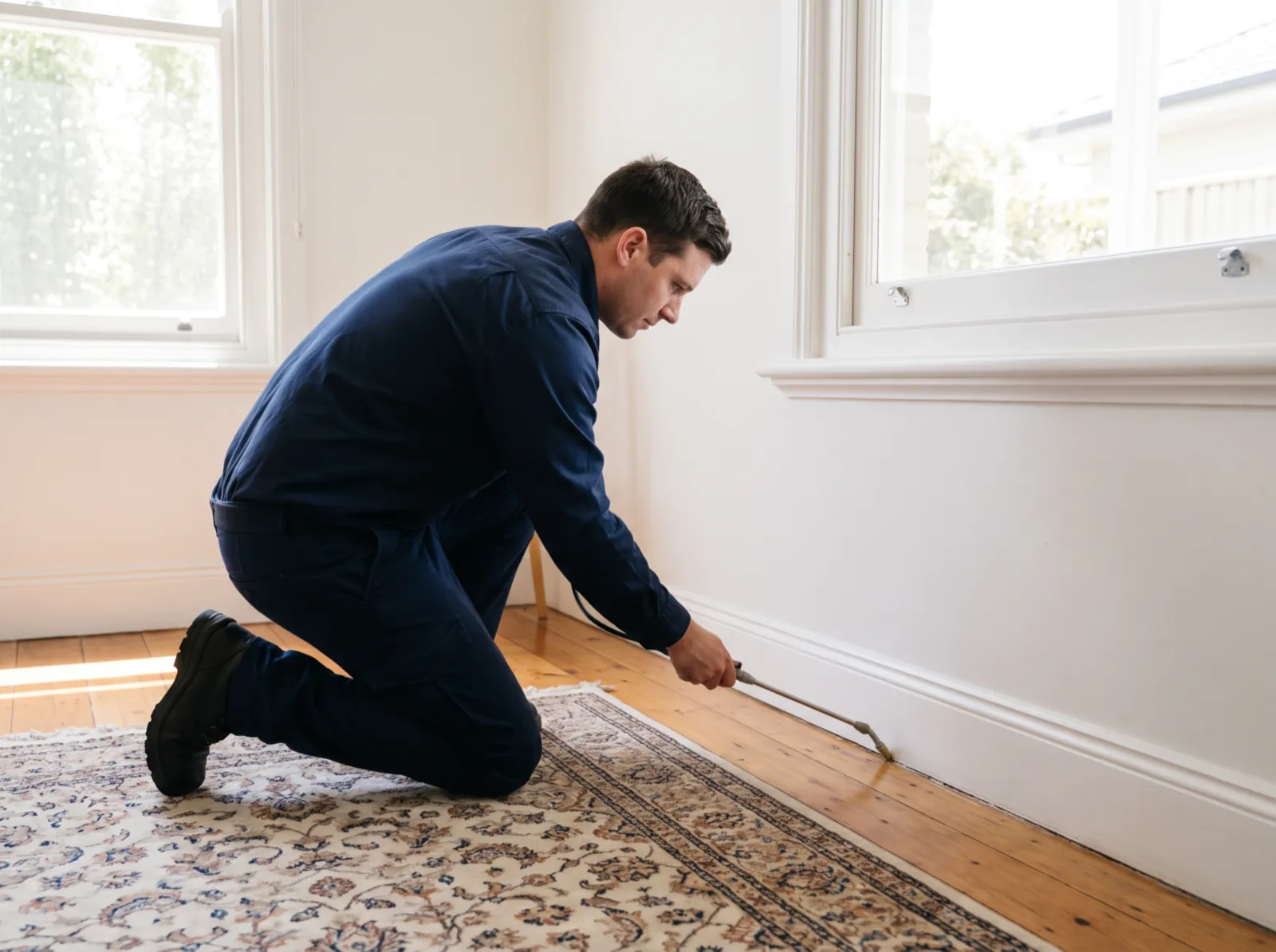
Illustrative photo. Methods described generically; every job is quoted on the property. This treats the house, not the animal; on-animal flea control is a matter for your vet.
The honest fine print
It clears fleas, it does not decide your bond. We can meet the flea condition to standard and put the receipt in your hand. The rest of the bond, cleaning, damage, the garden, the keys, is between you and the agent. Anyone selling an end-of-lease treatment as a bond guarantee is overselling it.
No pet, or an outdoor-only pet? You probably do not owe one. The fumigation condition is only valid where an indoor mammal was kept with written consent. If there was no pet, or it lived outside, a treatment generally cannot be required. Read the consent letter before you pay; an exit checklist that lists it anyway is worth a polite question, not an automatic payment.
A pest you did not cause is a different bill. Rats that were in the roof when you moved in, a wasp nest under the eaves, a problem from a building fault: those are usually the landlord's, decided by cause and timing rather than by who is moving out. The renting guide covers the split, and NSW Fair Trading is the referee if it is disputed.
Property managers and landlords. We handle changeovers across a rent roll on one contact, with the receipt sent straight to your file for each property. Tell us the run of addresses and we will keep it simple. Ask about portfolio changeovers →
Asked at every move
Can I just set off a supermarket flea bomb instead?
You can, but it usually fails the condition twice over. Most agents want a receipt from a licensed operator, and a fogger gives you no paperwork. It also misses the eggs and armoured pupae down in the pile, which is why a bombed house can bloom again a week later. If the lease says professional, a DIY can does not satisfy it. The fleas page explains why the bomb underperforms.
Does the treatment guarantee I get my bond back?
No, and we will not pretend otherwise. It proves the flea condition was met to standard, which takes that one item off the table. The rest of your bond is about the whole property and sits between you and the agent. A treatment plus a receipt is the most you can honestly buy here, and it is worth having.
I did not have a pet. Do I still need it?
Usually not. The fumigation condition is only valid where a mammal was kept indoors with the landlord's written consent. No pet, or a pet that lived outside, and a treatment generally cannot be required of you. Check the consent letter, and if an exit list still asks for it, that is a fair question for the agent before any money changes hands.
The lease says fumigation. Do I have to, even with no fleas?
If it was set as a written condition of your pet consent, yes. Under the NSW rules that condition must be carried out at the end of the tenancy regardless of whether there is a visible problem. It is not about the current flea count; it is the term you agreed to in exchange for the indoor pet.
When exactly do I book it around the clean?
Last. After the carpet clean and the final clean, with the furniture gone and the carpets dry. A treated floor that then gets vacuumed with a dusty machine or cleaned with wet carpet gear is a wasted treatment. Booking the flea job as the final step, once everything else is done, is the whole trick.
Can you send the receipt straight to my agent?
Yes. Put the agent's email in the enquiry and we copy them when we send yours, once the work is done. It lands in the bond file without you chasing anyone in the middle of a move.
- NSW Government (Fair Trading), Keeping a pet in a rental property. Sets out the fumigation and carpet-cleaning conditions a landlord may attach to pet consent, and the rule that fumigation applies only where the animal is a mammal kept indoors.
- NSW Government (Fair Trading), Ending a residential tenancy. Cleaning obligations at the end of a lease and how bond claims are made and disputed.
- NSW Government (Fair Trading), Pests or vermin in a rental property. Who is responsible for a pest problem, and how cause and timing decide between tenant and landlord.
- NSW EPA, Pesticide licences. Flea treatment around a home is licensed pesticide use in NSW; this is the scheme that governs pest management technicians and the receipt an agent relies on.

Tell us what you have seen
A description and a suburb is enough. A licensed technician reads every enquiry, works out what the job needs, and comes back with a straight answer and a free quote. No obligation, no pressure.