
Termites work out of sight, so you almost never see the insect. You see what it leaves behind. These are the things that turn up in the enquiries we read, and what each one usually means.
- Mud on a brick pier, slab edge or wall
- A mud lead, or mud tube: a covered highway termites build to travel from damp soil to timber without drying out. Pencil-thick, earthy, running vertically up a foundation. It is the single most reliable sign there is, and the reason a subfloor gets checked first.
- Timber that sounds hollow when you tap it
- Termites eat the soft wood from the inside and leave a paper-thin shell, so a skirting, architrave or door frame that was solid now sounds papery. A blistered or rippled paint surface over timber is the same thing seen from outside.
- Doors and windows suddenly tight
- Timber that has been hollowed and taken up moisture swells and distorts, so a door that always closed now sticks. On its own it is just a damp house; alongside another sign it is worth a look.
- Flying ants at dusk, especially after warm rain
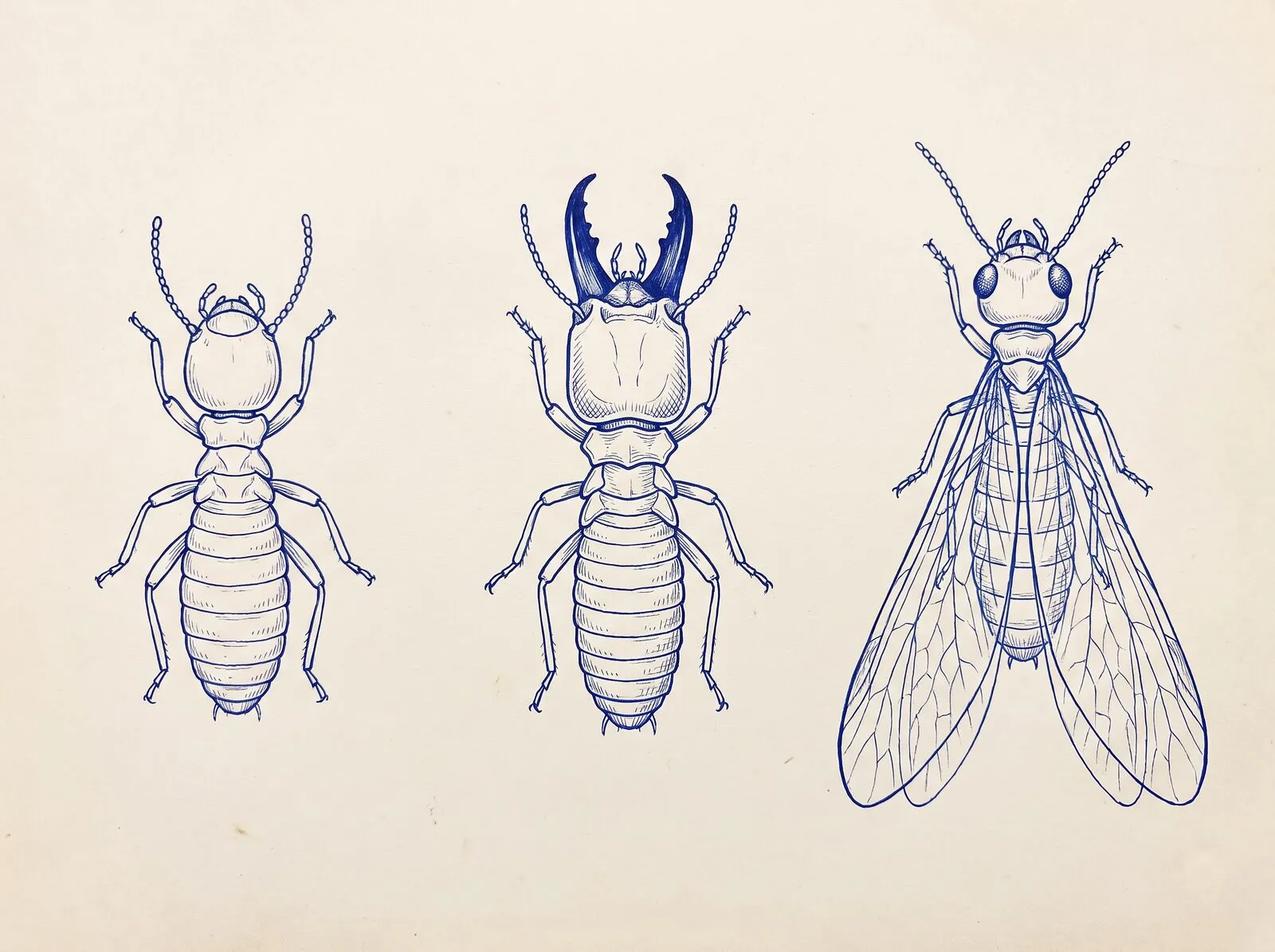
- Winged termites, called alates, leaving a mature nest on a colonising flight. They are drawn to light and often turn up at windows on a humid evening in spring or summer. Termite or flying ant is a five-second check: our flying ants or termites guide has it.
- A small pile of discarded wings
- Alates shed their wings soon after they land and pair off. A scatter of identical narrow wings on a windowsill or in a web means a flight happened nearby, which means a mature nest is within range.
- Mud or a dark stain seeping from a skirting or cornice
- Workings inside a wall breaking the surface. This is the one that says stop and book, because whatever you can see is a fraction of what is behind it.