
The Hunter house, annotated
Pick the house that looks like yours and check the numbered spots, including the termite-prone ones.
Open it →
Termites are not looking for your house in particular. They are foraging for moisture and timber, and they take the first easy invitation they find. The trade word for those invitations is conducive conditions, and happily most of them are habits around the house, not the house itself. Here is what they are, split into the ones you can fix this weekend and the ones only an inspection can settle.
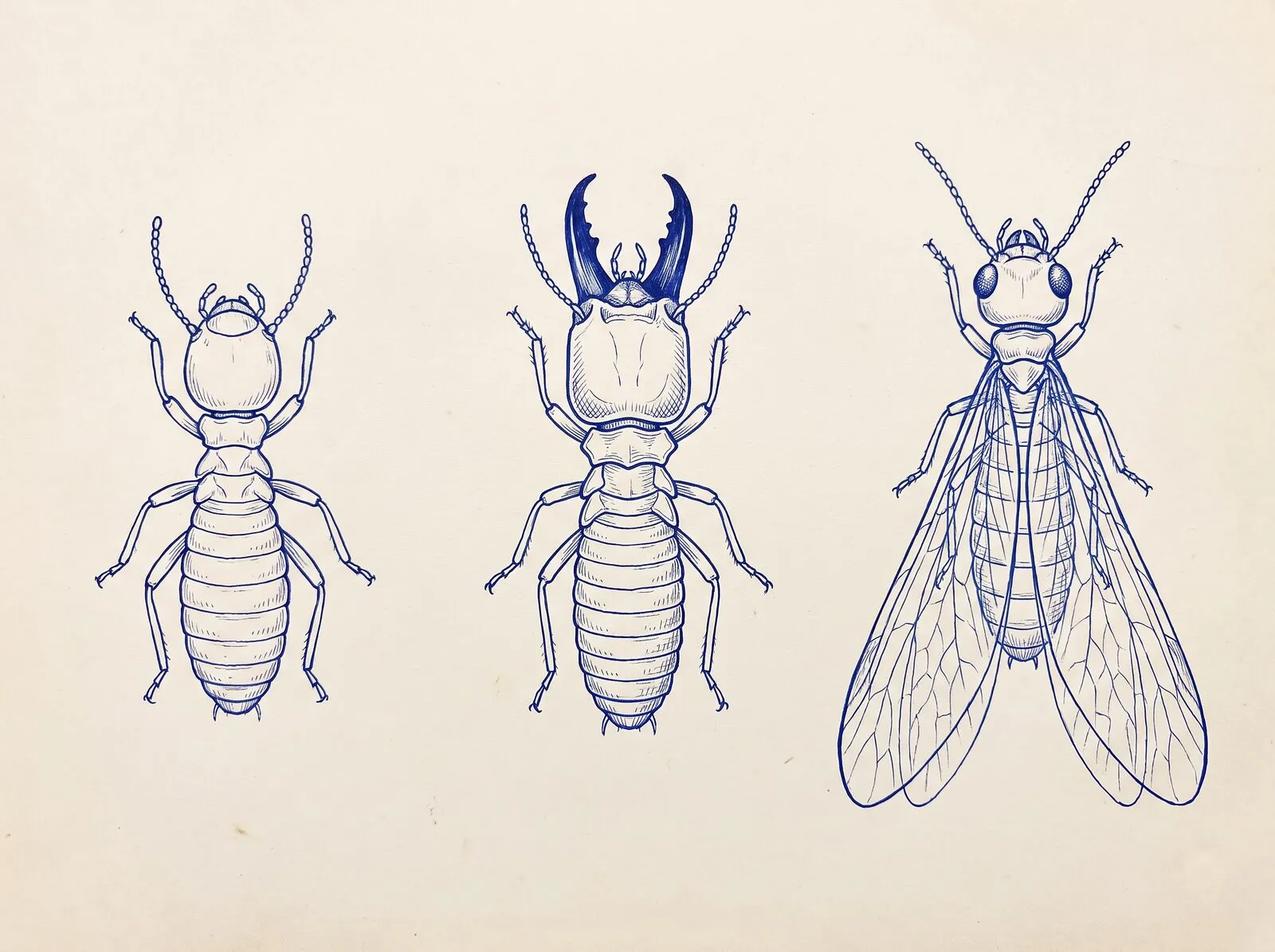
A subterranean termite colony lives in the ground and sends workers out to look for food. What it needs to reach a house is simple: moisture to keep from drying out, timber it can get its mouth on, and a way in that stays hidden from daylight. Conducive conditions are anything around a building that quietly supplies one of those three.
None of them summon termites on their own. What they do is tip the odds. A dry, well-ventilated, well-kept house with a clear inspection zone at the wall base is a hard target. The same house with mulch piled over the vents, a dripping tap and firewood stacked against the weatherboards is an easy one. Same street, same species, very different invitation.
That is why this guide is worth twenty minutes with a wheelbarrow. You cannot move your house off the coast or out of the old timber belt, but you can take away most of what makes it easy. The rest, the parts you cannot see or safely judge, is what a licensed inspection is for.
The same six turn up again and again in Hunter homes. The solid spots are yours to fix. The open ones are hidden or need judgement, so they belong to an inspection.
None of this needs a licence, and all of it makes the next inspection quicker and cheaper. The theme is the same throughout: keep the base of the wall dry, clear and timber-free, so anything approaching has to do it in the open.
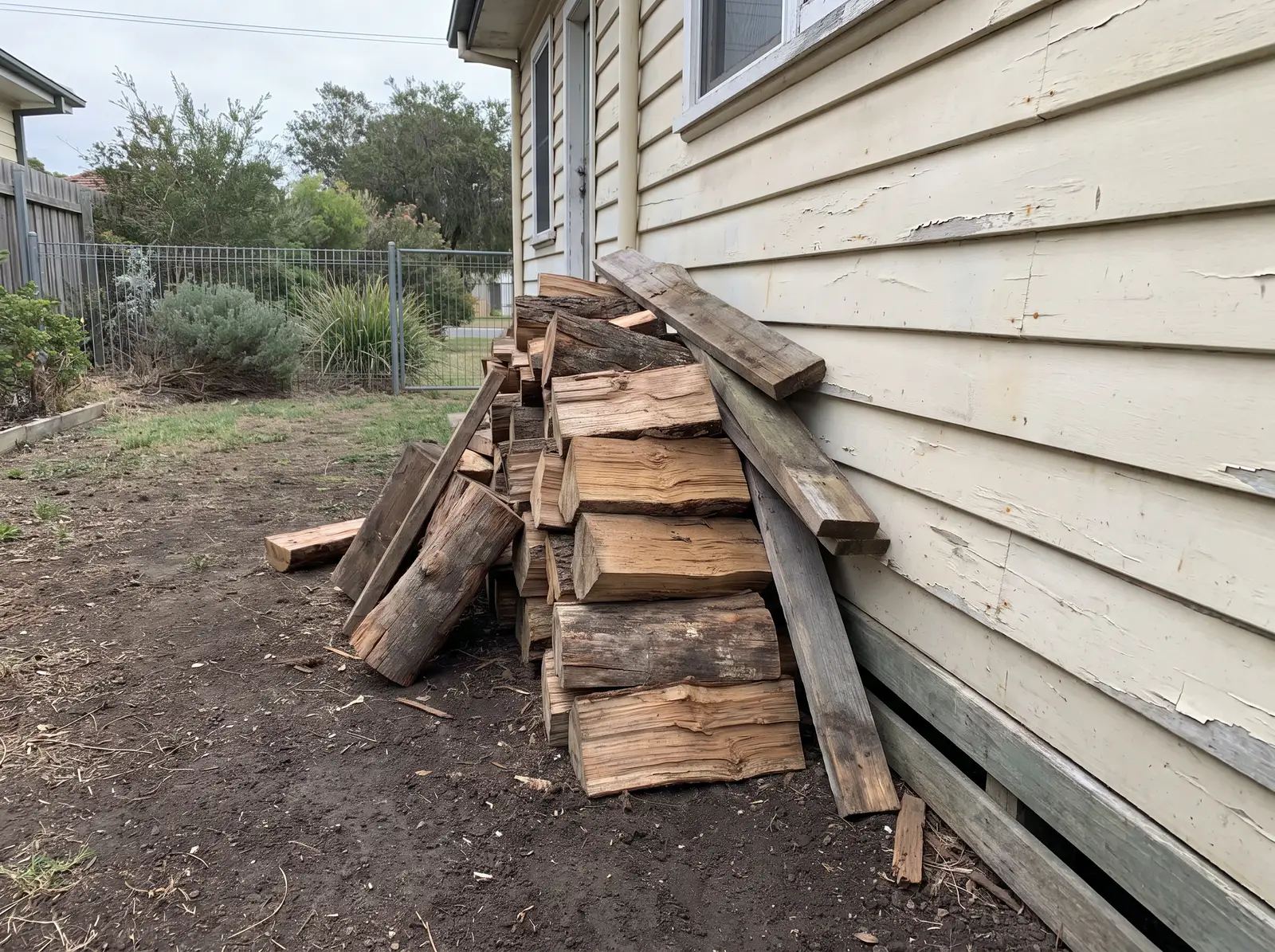
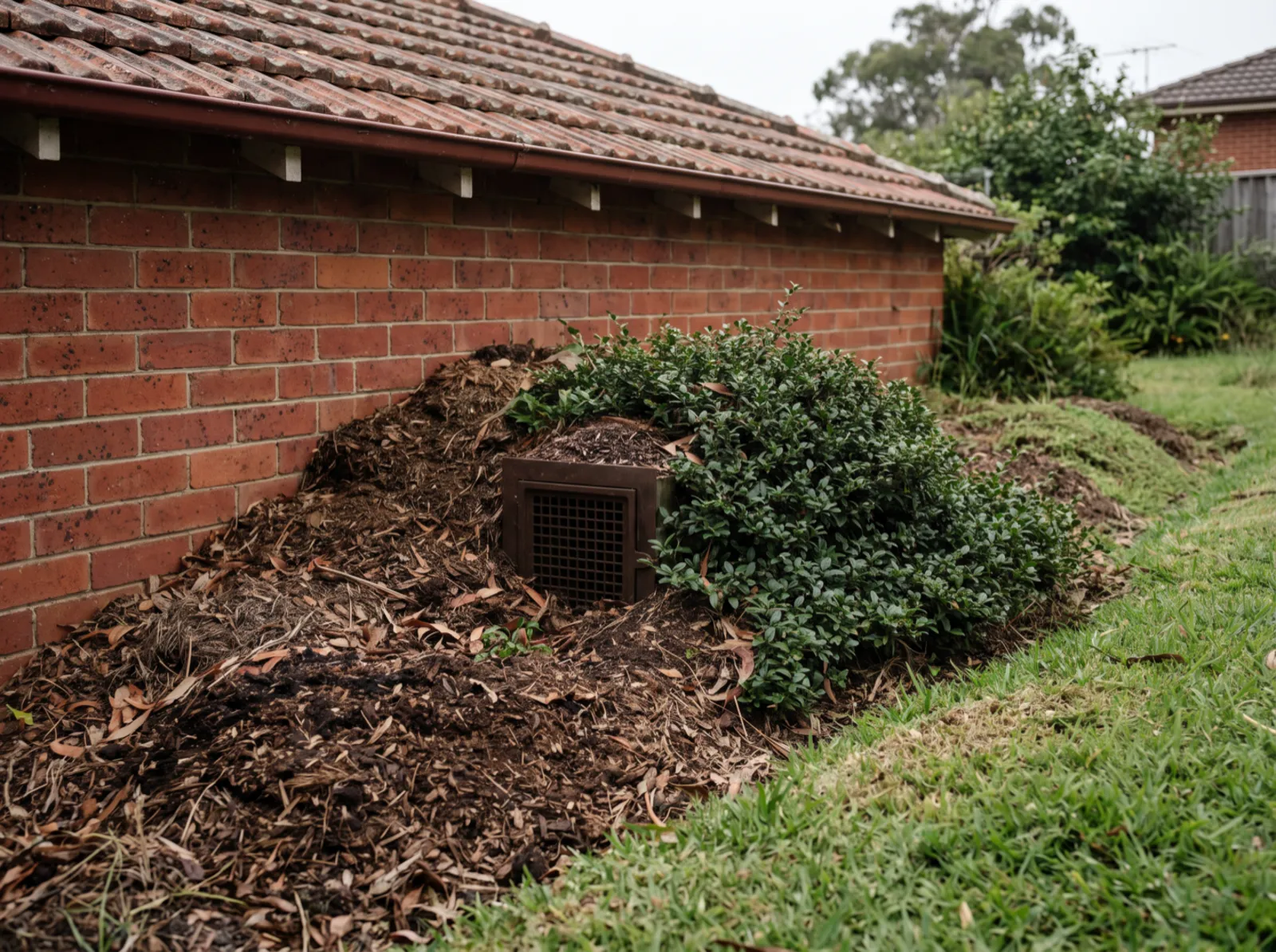
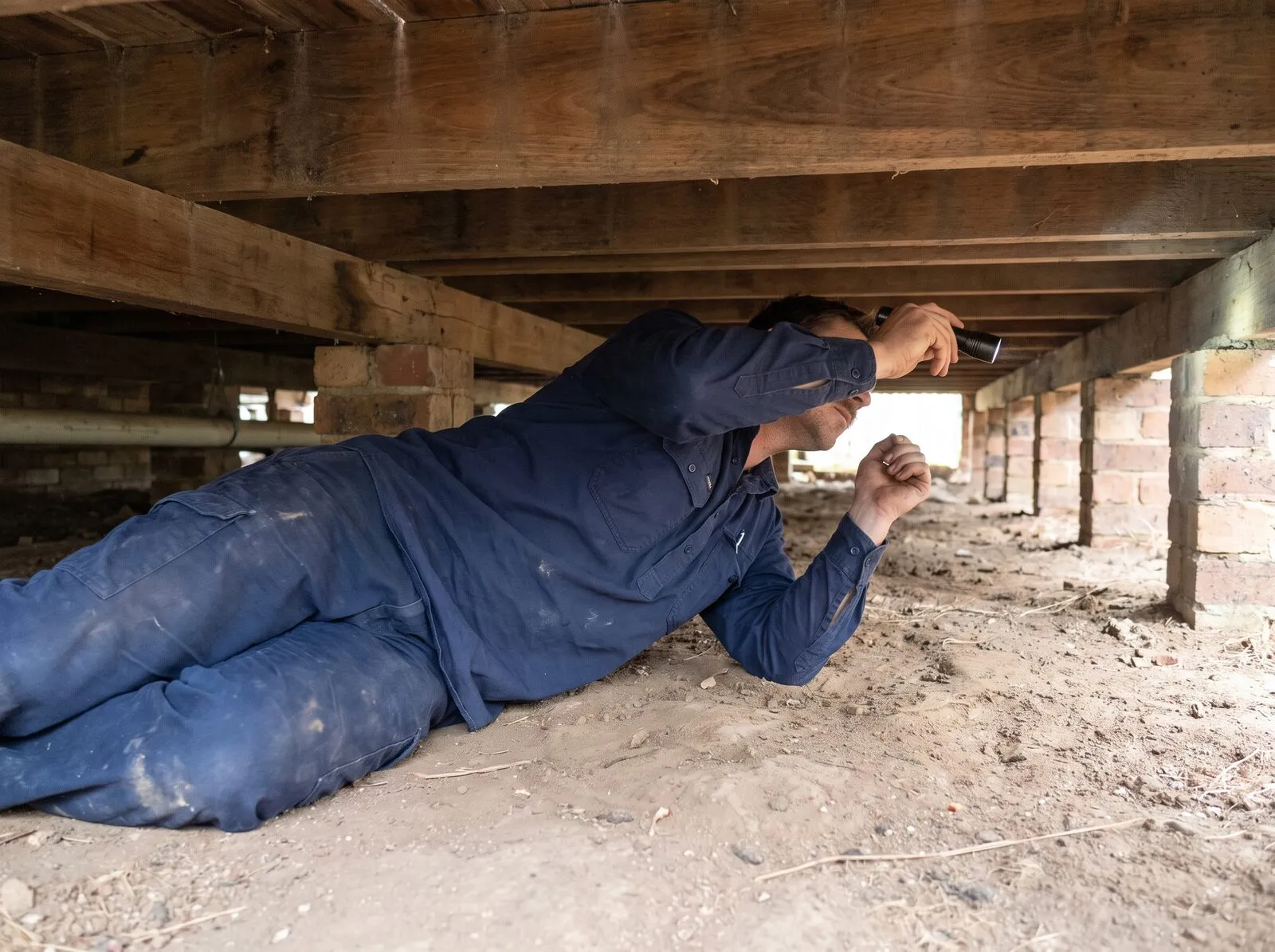
Illustrative photos. If clearing any of this turns up mud tubes or hollow-sounding timber, stop and read the next section before you go further.
The rest are either out of sight or a matter of judgement about a barrier and a building. Doing them yourself risks either missing the problem or making it harder to trace. These are what a detailed visual termite inspection is for.
Found mud tubes or hollow timber already?
Leave it just as you found it. Do not spray it, break it open or knock the workings off, because a disturbed colony scatters and gets much harder to find and treat. Cover it back over if you uncovered it, and book a licensed inspection.
Housing stock decides the usual conducive conditions as much as anything. The Hunter has four rough environments, and each one tends toward its own version of the same story.
Still yes. A cleared-up house lowers the odds and makes any problem show earlier, but it cannot reveal whether a colony is already working behind a wall or under the floor. Only a licensed inspection settles that. A tidy, clear house is also quicker and cheaper to check, and simpler to keep watch over through the year.
Mulch on a garden bed away from the house is fine. The problem is mulch mounded up against the wall and over the subfloor vents, where it traps moisture and hides the strip you most want to be able to see. Keep a clear, dry inspection zone at the wall base and mulch the rest of the bed however you like.
It is worth raising with an inspector. Covering the weep holes and vents seals the subfloor's ventilation and hides the inspection zone at the same time, and it is one of the more common conducive conditions we find on tidied-up houses. It does not mean you have termites; it means the house has lost two of its early-warning advantages.
No house is automatically safe. New slab homes are built with a barrier, but the barrier only works while the slab edge is kept clear and visible. The usual way a new home picks up conducive conditions is a year or two later, when a path, a patio or a garden bed goes in over that edge. Keeping the slab edge exposed is the whole job.
A barrier and good habits work together, they do not replace each other. Paving, gardens, stored timber or a leaking pipe can bridge or undermine even a well-installed barrier, which is exactly why barriers are inspected on a schedule rather than fitted and forgotten. The two honest ways to manage termites are covered in the barrier or baiting guide.
Stop, and leave them undisturbed. Mud tubes, or leads, are how termites travel, and breaking them open or spraying them just scatters the workings and leaves the colony harder to trace. Cover the area back over if you disturbed it, and book a licensed inspection so it can be found and dealt with properly. The flying ants or termites guide helps if what you saw had wings instead.
Pick the house that looks like yours and check the numbered spots, including the termite-prone ones.
Open it →What a detailed visual inspection covers, and how barrier and baiting management actually works.
See the service →Harbourage, conducive conditions, non-repellent, mud lead: the trade's words in English.
Open the glossary →A description and a suburb is enough. A licensed technician reads every enquiry, works out what the job needs, and comes back with a straight answer and a free quote. No obligation, no pressure.