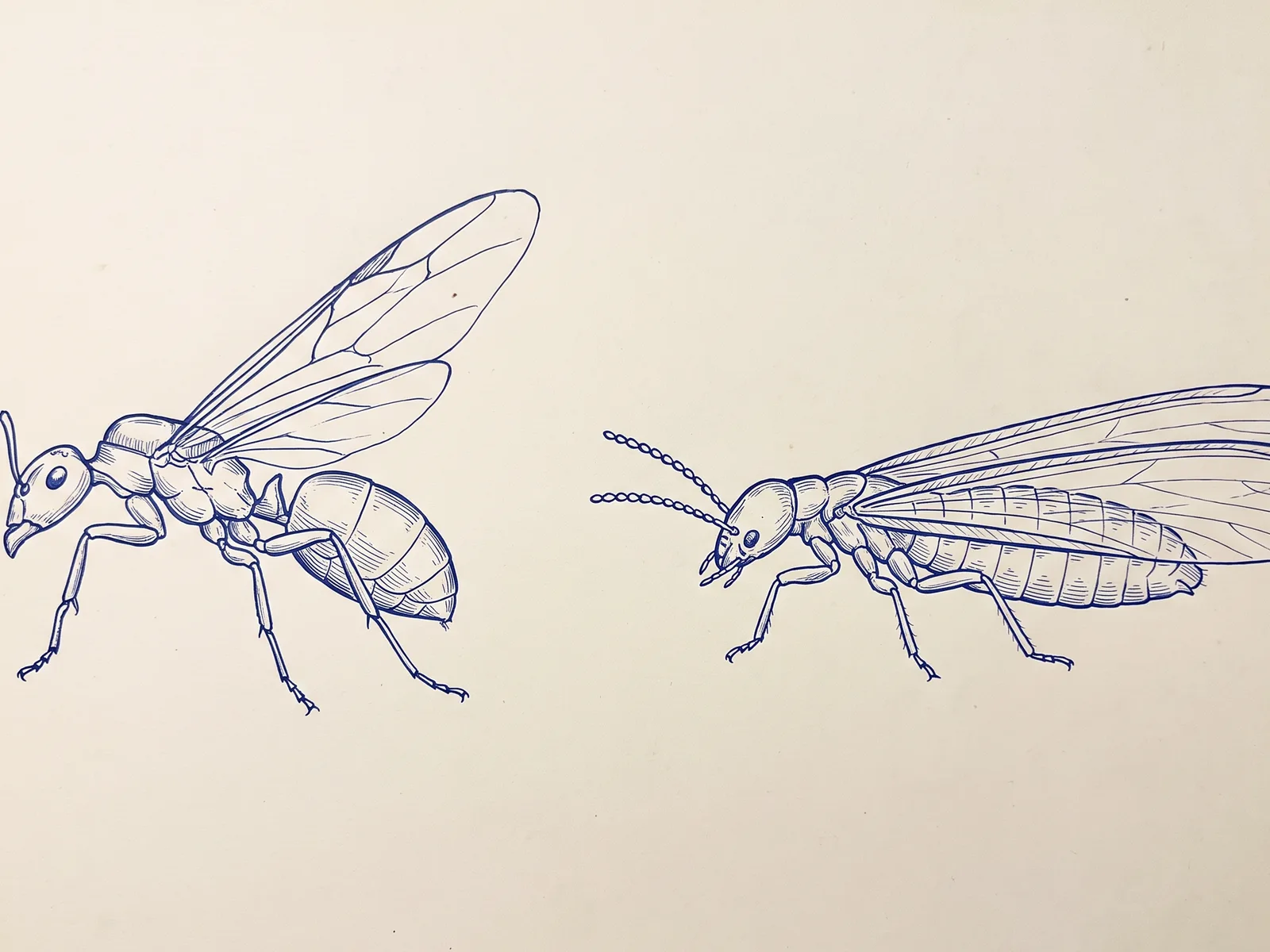
Why they turned up, and what the wings tell you
Both insects do the same thing on the same kind of night. When a nest matures it sends out winged reproductives, called alates, on a colonising flight to start nests of their own. Warm, humid, still evenings after rain are the trigger, which is why you get them at the flyscreen in spring and summer, and why they cluster at a lit window. On this coast termites stay active close to year round, so the season is a hint, not a rule.
The flight itself is brief. Alates are weak fliers, they land, and then they shed their wings and pair off, which is why the thing you find in the morning is often just the wings and not the insects. That scatter of identical narrow wings on a windowsill or caught in a web is worth reading carefully: ants keep their wings a good while, termites drop theirs almost at once. A neat pile of matching shed wings leans termite before you have caught a single one.
Here is the part that matters. A flight does not mean the nest is in your walls, and it does not mean it is not. Alates come from a mature nest within flying range, which might be a neighbour's yard, a street tree, an old stump, or the timber under your own floor. The flight tells you a nest is close. Only an inspection tells you whose timber it is in.