
Pest control in Maitland
Maitland is river-flat country, and the water sets the calendar. Houses here sit up high on stumps for a reason, the ground stays damp long after the sky clears, and a wet spell always sends the rodents indoors a few weeks later. This page is what we know about pest control on the flats, and when to get ahead of it rather than wait for the scratching.
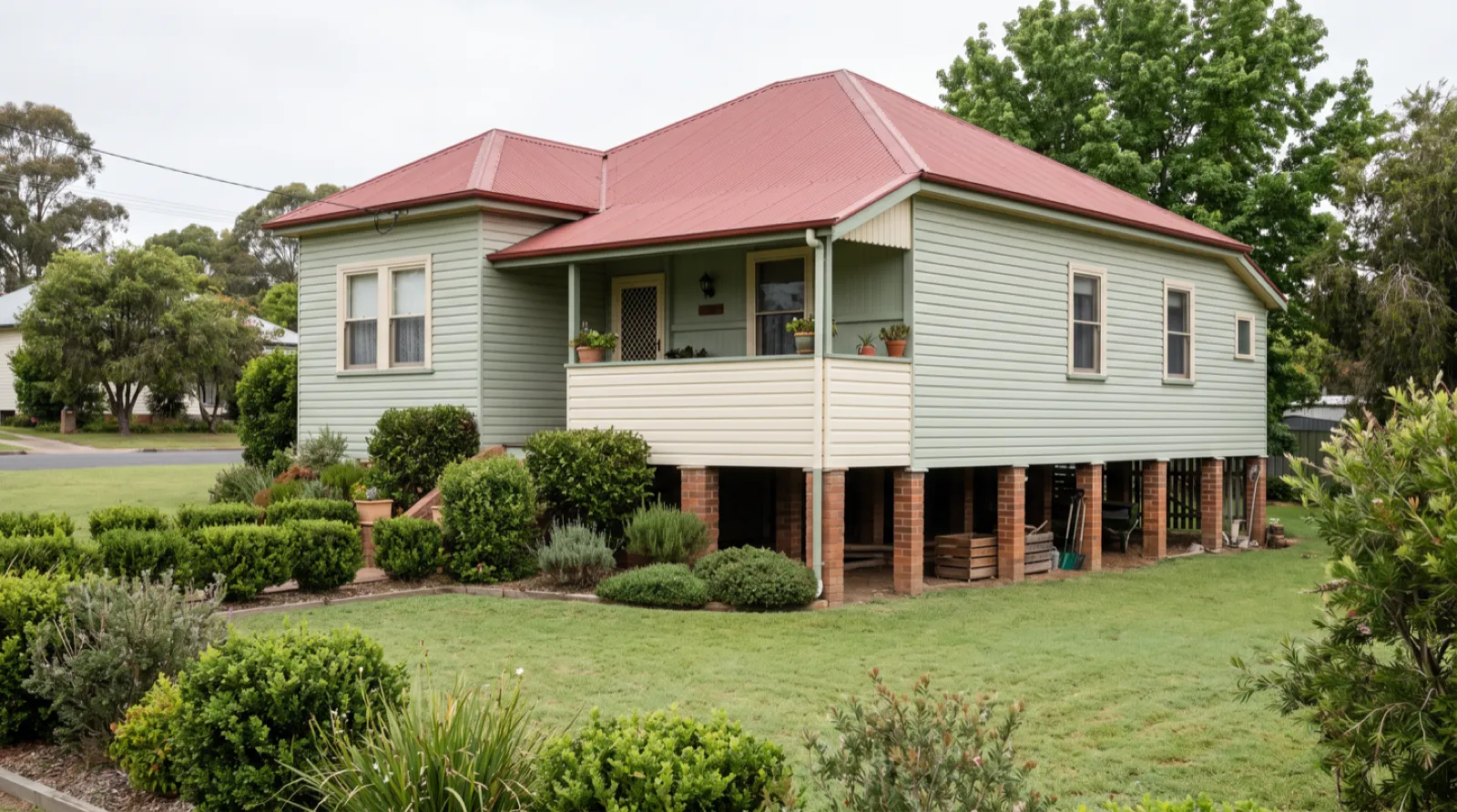
Three kinds of floodplain block, three pest stories
- Raised weatherboards on stumps
Central Maitland · Lorn · Morpeth · Bolwarra - The old river towns build high on purpose, and that open crawl space beneath the boards is the whole story here. It is the best subfloor a technician could ask to inspect, and the best harbourage a rat or a termite could ask to live in. Damp bearers, stored timber, a garden bed pushed up against a stump: everything the flat gives moisture to, it gives to pests first. We start every inspection underneath.
- River flats and paddock edge
Bolwarra · Largs · Oakhampton · the creek lines - Where the houses back onto grazing land or a creek flat, the pest pressure comes off the paddock, not the street. A wet season fills the flats with feed and the rodent population climbs out there long before it is your problem. When the water or the cold moves it, it moves toward the nearest warm roof. Living on the edge of the green is the risk worth naming, and the reason proofing matters most here.
- The newer slab estates
Thornton · Chisholm · Ashtonfield · Gillieston Heights - The growth suburbs are concrete slab on graded ground, and that changes the entry, not the risk. No open subfloor to crawl, so termites come in at the perimeter, up a weep hole or a slab edge buried under new landscaping, and rodents arrive by the roof instead. Newer does not mean safe on a floodplain; it means we look in different places, starting with the ground built up against the walls.

The month after the rain, not the day of it
The mistake people make on the flats is watching the sky. The flood is not when the pests arrive. A wet spell loads the paddocks and creek flats with feed and cover, the rodents out there breed up through it, and only when the ground dries or the nights turn cold does that swollen population go looking for somewhere warm and dry. That somewhere is your roof, and the timing is remarkably consistent: the busy weeks are the weeks after the wet, not during it.
Which makes the quiet window the useful one. If you had a wet winter or a soggy few weeks, the roof that has not made a sound yet is the roof to proof now, before the surge finds the gap it always finds. Booking in the dry spell is the cheap version of this job. Booking when the scratching starts is the same work done under pressure, competing with everyone else on the flat who also waited.
Termites keep their own steadier clock underneath all of this. Damp subfloors on a floodplain stay conducive year-round, so the timber pest story is never a season here, it is a standing condition. A wet year simply turns the volume up. That is why we treat moisture as the first reading on any Maitland inspection, rodents or not.
The calls a wet year brings
Not the whole book, the floodplain's short list. Each links through to the full field-guide entry.
- PL. 04Rats and miceThe post-rain surge off the paddocks into roof voids and raised subfloorsPeak Apr to Sep→
- PL. 06TermitesDamp-subfloor pressure under the raised timber stock, year-round on the flatsYear-round→
- PL. 03AntsTrails indoors as the ground floods, and the flying ants a warm wet dusk brings upActive Sep to Mar→
- PL. 11MosquitoesStanding water on the flats after a wet spell, and what treatment can honestly doActive Oct to Apr→
What an inspection covers here
On the flats the inspection starts underneath, always. In the raised stock a technician can get right in under the floor, and the subfloor answers three questions in one crawl: how wet the ground is holding, whether the bearers and stumps are feeding termites, and where the rodents are running. Moisture is the first reading, because on a floodplain the damp is the condition doing the inviting, and half the fixes are ventilation and drainage before they are chemistry.
From there it is the roof void, the wall cavities, the kitchen and wet areas, and the yard timber: fences, gates, garden beds and any stored wood stacked against the house. On a slab estate the crawl becomes a careful walk of the perimeter instead, looking for the weep holes buried under new turf and the slab edge lost under a raised garden.
Treatment follows what the house showed us. Rodent work is baiting or trapping on the actual runs, then proofing the entries so the next wet year does not simply refill the roof. Anything termite-shaped stops the conversation until a detailed visual inspection is done and in writing. That order, moisture first and inspection before treatment talk, is the whole method on the flats.
Suburbs we cover from here
Maitland · East Maitland · West Maitland · Lorn · Bolwarra · Largs · Morpeth · Telarah · Rutherford · Oakhampton · Aberglasslyn · Metford · Ashtonfield · Tenambit · Thornton · Chisholm · Gillieston Heights · Raworth
The flats do not stop at a boundary line, and neither do we. South toward the lake the ground firms up into brick-and-tile on piers, a different first look covered on the Lake Macquarie page; east it runs down to Newcastle and the salt band, and north-east to the sand and bush of Port Stephens.
Asked from the flats
We had a wet few weeks and now there is scratching in the roof. Is that the flood?
It is the aftermath, and it is the most common call we get out here. The rain does not put rodents in your roof, the dry-off afterward does, when the population that bred up on the wet paddocks goes looking for somewhere warm. It is treatable and normal for the flats. The lasting part is proofing the entry so the next wet season does not simply refill the same roof.
My house is up on stumps. Is that good or bad for termites?
Both, honestly. A raised subfloor is the easiest kind of house to inspect properly, because a technician can get right underneath and read the whole timber frame and the ground moisture in one crawl. That same open, damp space is also good habitat if it is left unventilated with timber stored in it. Well-kept and dry, a raised house is an advantage. Whether yours is a problem is a question only an inspection answers.
Our estate is new, built on a slab. Surely termites are not a worry yet?
Age is not the protection people think it is on a floodplain. A slab removes the subfloor, so termites come in at the perimeter instead, up a weep hole hidden under fresh turf or across a slab edge buried by a raised garden bed. New landscaping is often what opens the door. The conducive conditions guide covers what actually matters more than the build date.
The mozzies are unbearable after rain. Can you spray them away?
We can reduce the pressure around the house, but nobody honest will promise to clear a floodplain of mosquitoes. On the flats the standing water is the source, so the real gains come from finding and draining the breeding sites in your own yard first, with a barrier treatment second. We will tell you plainly what treatment can and cannot do before you book it. See mosquitoes.

Tell us what you have seen
A description and a suburb is enough. A licensed technician reads every enquiry, works out what the job needs, and comes back with a straight answer and a free quote. No obligation, no pressure.