
Mosquito control in Newcastle and the Hunter
Mosquitoes are the one pest where the honest answer starts in your own backyard. A barrier treatment knocks the numbers right down for the season, but it is the standing water around the house that decides how many turn up in the first place. This page is straight about both: what you can fix in an afternoon, what a treatment adds on top, and what nobody can promise.
What a treatment can and cannot do
Most mosquito advertising skips this part, so we will lead with it. Treatment is genuinely worth doing; it is also not magic. Knowing the line up front is what keeps you from paying for a promise no one can keep.
What a treatment can do
- Cut the biting right downTreating the shaded surfaces where adult mosquitoes rest by day drops the number around your sitting areas from unbearable to barely noticed.
- Hold it for the seasonA barrier keeps working for weeks, so a few well-timed visits carry you through the warm months instead of one afternoon.
- Give your evenings backThe realistic goal is a deck or a backyard you can actually use at dusk, not a laboratory with none left alive.
- Find the water you missedPart of the visit is walking the yard and pointing out the breeding spots you have stopped seeing, which is where the lasting gain is.
What no treatment can do
- Make a yard mosquito-freeZero is not a real target near a creek, a wetland or a neighbour who never empties anything. Anyone promising none is guessing.
- Stop the ones drifting inMosquitoes bred in tidal flats and creek plains travel on the evening air. A barrier around the house cannot fence out the whole valley.
- Last all summer from one visitA barrier fades. Rain, heat and dense foliage all shorten it, so it is a program across the season, not a one-off cure.
- Fix a yard full of standing waterIf the breeding water stays, the population keeps refilling and no spray keeps up. The water has to go first.

Breeding-site reduction comes first
A mosquito needs still water to breed, and not much of it. A bottle cap holds enough. The single most effective thing anyone does about mosquitoes is a slow walk around the house tipping out and clearing the places water sits. It costs nothing and it is the half of the job a treatment cannot do for you.
The walk-around, spot by spot
- Pot-plant saucers and drip trays
- The classic. Water sits in the saucer for days after you water the plant. Tip them, or fill them with sand so the plant still drinks but nothing breeds.
- Blocked gutters and roof valleys
- A gutter holding leaf litter holds water, out of sight, for the whole wet spell. Clearing them is a mosquito job as much as a roof one.
- The forgotten container
- Buckets, wheelbarrows, kids toys, an old tyre, the boat or trailer tarp with a sag in it. Tip, cover or store anything that holds a puddle.
- Rainwater tanks without a screen
- An unscreened tank or downpipe is a breeding factory that also keeps topping itself up. A fine mesh screen on the inlet and overflow shuts it.
- Bromeliads and plant axils
- Some garden plants hold water in the leaf. Flush them out with a hose every few days in the warm months, or move them away from the sitting areas.
- Pool covers, ponds and low spots
- A sagging pool cover, a neglected pool or a boggy corner of the yard all count. A pond with fish is usually fine; the fish eat the larvae.
Some of the mosquitoes biting you were never yours. The Hunter sits against tidal wetland, the harbour estuary and the Maitland floodplain, and floodwater and salt-marsh mosquitoes bred out there drift into backyards on the evening. You cannot clear water you do not own, and a barrier will not fence out the valley. Near water the target is an evening you can sit through, not a mosquito-free zone; we will tell you which of the two your address is.
The barrier, and where it goes
Adult mosquitoes do not fly all day. In the heat they rest in cool, shaded, humid places, and that is exactly where the treatment goes, not sprayed over the whole yard. Done after the water is dealt with, it is the second lever, not the first.
You clear the water first
The walk-around above is step one, and it is yours. A barrier laid over a yard still full of breeding water is bailing with the tap running. We will help you find the spots on the day, but tipping them out is the part that keeps working for free.
We treat where the adults rest
A residual treatment onto the shaded resting surfaces: dense foliage and hedges, under the eaves and the deck, the fence line, the cool side of the shed. Mosquitoes landing there through the day pick it up. It is targeted and low-volume, not a fog over the lawn.
We time it to the season and come back
The first barrier goes down as the weather warms, and because it fades we plan the reapplications around your summer rather than pretending one visit lasts to April. Per visit or as a warm-season program, quoted in plain terms with no lock-in.
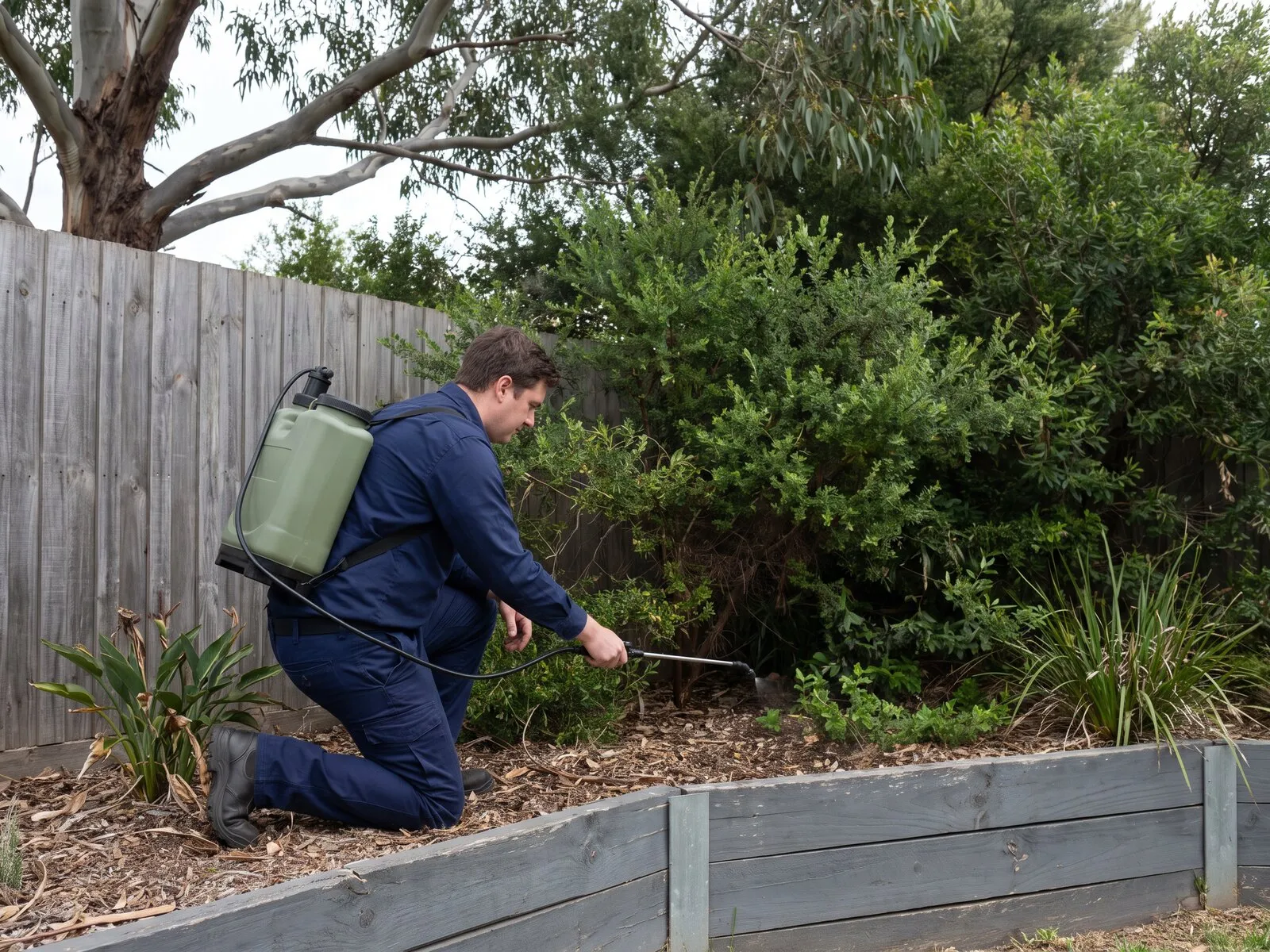
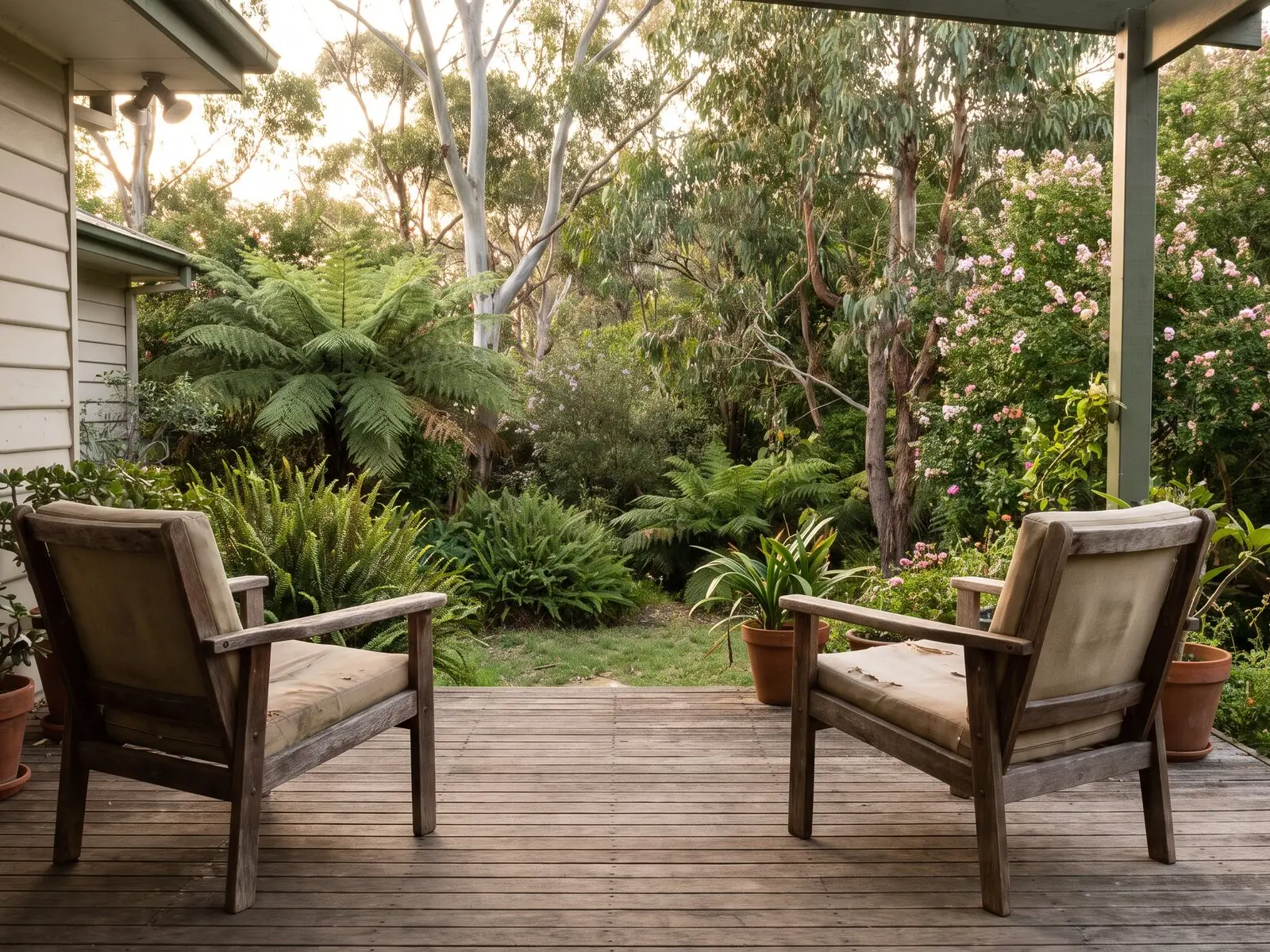
Illustrative photos. Methods described generically; every yard is quoted on what it needs. A licensed technician does the work.
The honest fine print
A treatment is a knockdown, not a cure. It keeps the numbers low while it is fresh and while the water stays cleared. It is not a one-time fix and we will not sell it as one. Think of it as the way you keep the season usable, renewed as it fades.
We are not going to scare you about disease. Plenty of pest advertising leads with what mosquitoes can carry. We would rather talk about getting your evenings back. If you have a specific health worry, your GP or NSW Health is the right place for it; our job is the pest, done honestly.
Ponds, tanks and pools. A pond with fish or frogs usually manages itself, because the fish eat the larvae, and we will not put product into water with animals living in it. A neglected pool, a sagging cover, or a tank without a screen is the opposite, and worth sorting before summer.
Safe around the family. Treatment goes onto resting surfaces like fence lines and dense foliage, kept off play areas and the vegetable patch, with a re-entry time we tell you. Mention the kids, the dog, the chooks, the pond and the veggies in the enquiry and the plan is built around them.
Renting? Whether mosquitoes are the tenant's or the owner's problem depends on cause and grounds maintenance. The renting guide sets out how the split usually works.
Asked every summer
Can you make my backyard mosquito-free?
No, and anyone who promises it is guessing. A treatment knocks the population right down and keeps it low through the season, which is the difference between a yard you cannot use and one you can. Zero mosquitoes is not a real target in a Hunter backyard with a creek, a wetland or a neighbour over the fence. We would rather say that now than sell you a number we cannot hit.
How long does a barrier treatment last?
A few weeks of solid knockdown, tapering after that, which is why summer is usually a couple of visits rather than one. Heavy rain, heat and how much shaded foliage you have all move the number. The quote spells out the program before you commit, and there is no lock-in.
Do you fog the whole yard?
No. Fogging is a short-lived knockdown of the adults on the wing and it drifts off; it does nothing to the water they came from. What lasts is treating the shaded surfaces where they rest by day and clearing the breeding water. We will explain what suits your yard rather than reaching for a fogger.
I have tipped out every container and still get bitten. Why?
Because not every mosquito is yours. Container breeders come from your yard, and that is a fight you can win. Floodwater and salt-marsh mosquitoes come from tidal wetland and creek flats, sometimes a fair way off, and drift in on the evening air. Near water you will not reach zero, but a barrier around the sitting areas still makes the evening usable.
When should I book?
Before you need it. Getting the water sorted and the first barrier down in early spring means the population never gets a head start on you. Booking in the middle of summer works too; it is just catching up rather than getting ahead.
Is it safe around kids, pets and the veggie patch?
Treatment goes onto resting surfaces like fences and dense foliage, not over play areas or the vegetable bed, and there is a re-entry time we tell you. Tell us about the kids, the dog, the chooks, the pond and the veggies in the enquiry and the plan is built around them. A licensed technician does the work, and that licence is exactly about putting the right product in the right place.
- NSW Health, Mosquitoes and arboviral diseases. The state health authority's guidance, including reducing mosquito breeding sites around the home, the source-reduction advice this page leads with.
- Australian Museum, Mosquitoes. Reference identification and life cycle, including why still water is the one thing every mosquito needs to breed.
- NSW EPA, Pesticide licences. A residual barrier treatment around a home is licensed pesticide use in NSW; this is the scheme that governs pest management technicians.

Tell us what you have seen
A description and a suburb is enough. A licensed technician reads every enquiry, works out what the job needs, and comes back with a straight answer and a free quote. No obligation, no pressure.