Cost is real and we will not pretend otherwise, but with no inspection done there is no honest figure to give, and the thing most people are really weighing is what it does to the house and the routine. So here is the comparison in those terms.
The questionThe barrierBaiting
Time to protection
Working the day it is finished. The treated zone is there as soon as the last of it goes into the ground.
Weeks to months. Termites have to find the stations, feed, and carry it back through the colony in their own time.
The day it goes in
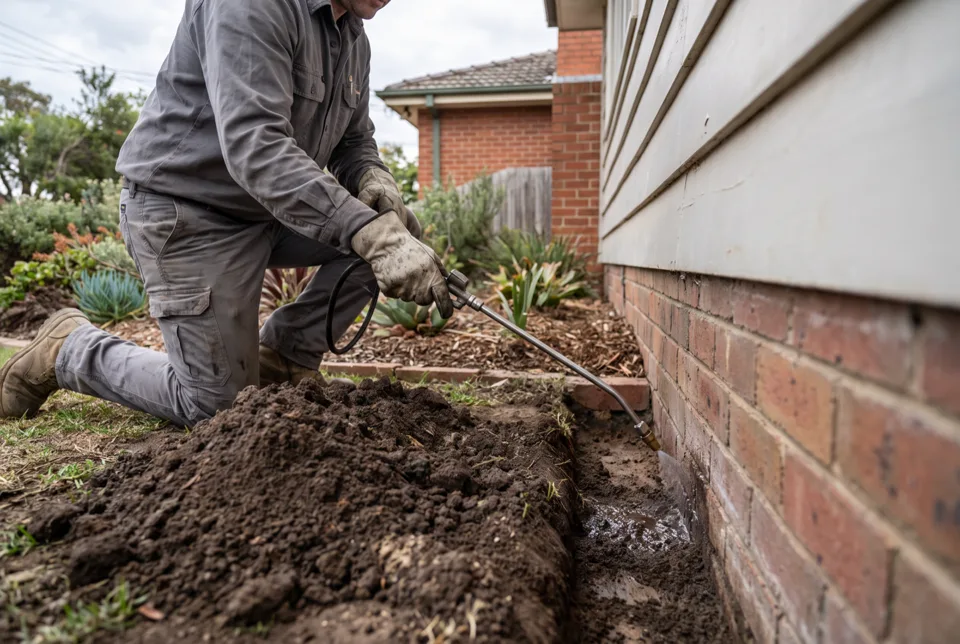
A narrow trench dug around the footings, and paths or a slab edge drilled where the zone has to stay continuous. A working day, some mess, tidied after.
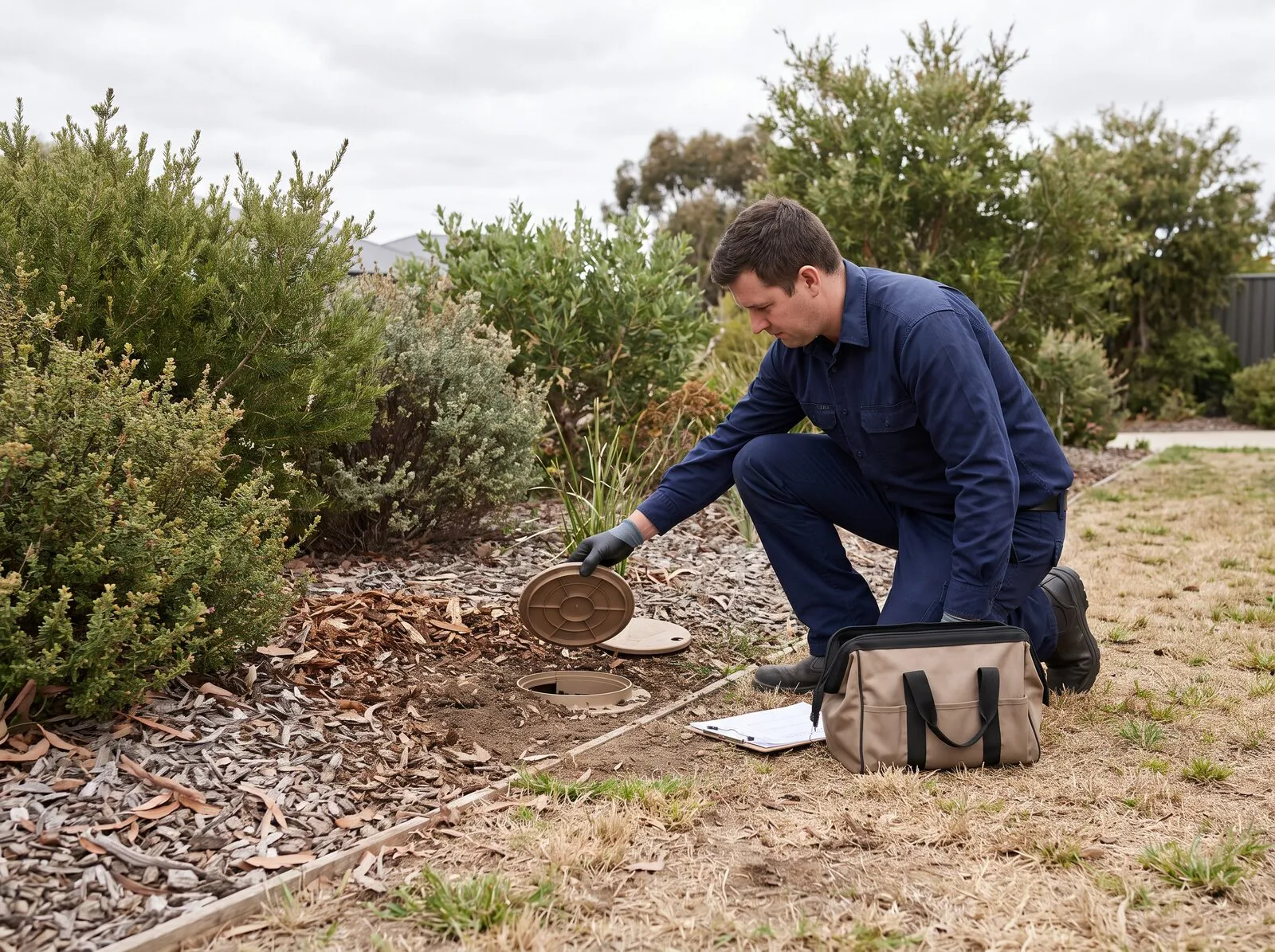
Stations set flush into the soil around the house. Quieter, much less digging, usually a shorter visit.
Your garden and paths
Needs full, even access to the soil against the walls. Garden beds, pavers and anything built up over the line have to be worked around or lifted to reach it.
A ring of discreet caps at ground level. You mow and garden around them and mostly forget they are there.
Living with it after
Largely invisible. It sits in the ground doing its job and is renewed over its service life, not checked every few weeks.
An ongoing relationship. The stations are checked on a set cycle, which is the point of them, and that rhythm continues.
Tricky sites
Harder where the soil cannot be treated evenly, or close to a rainwater tank, bore, creek or drain where a liquid does not belong.
Often the honest fit for exactly those spots, because a station can sit where a treated soil zone should not.
What it aims at
A protective zone the house sits inside, so termites cannot reach the timber without crossing it.
Working the colony itself down, with the aim of eliminating it rather than only holding it off.