
Pre-purchase timber pest inspections, Newcastle and the Hunter
You are mid-purchase with a clock running, and half the trade wants you to feel that clock. This is the calm version. A timber pest inspection carried out to AS 4349.3 on the house before you commit, a written report you can read at the kitchen table, and a straight answer to the only question that matters: is there anything under this floor you should know about first.
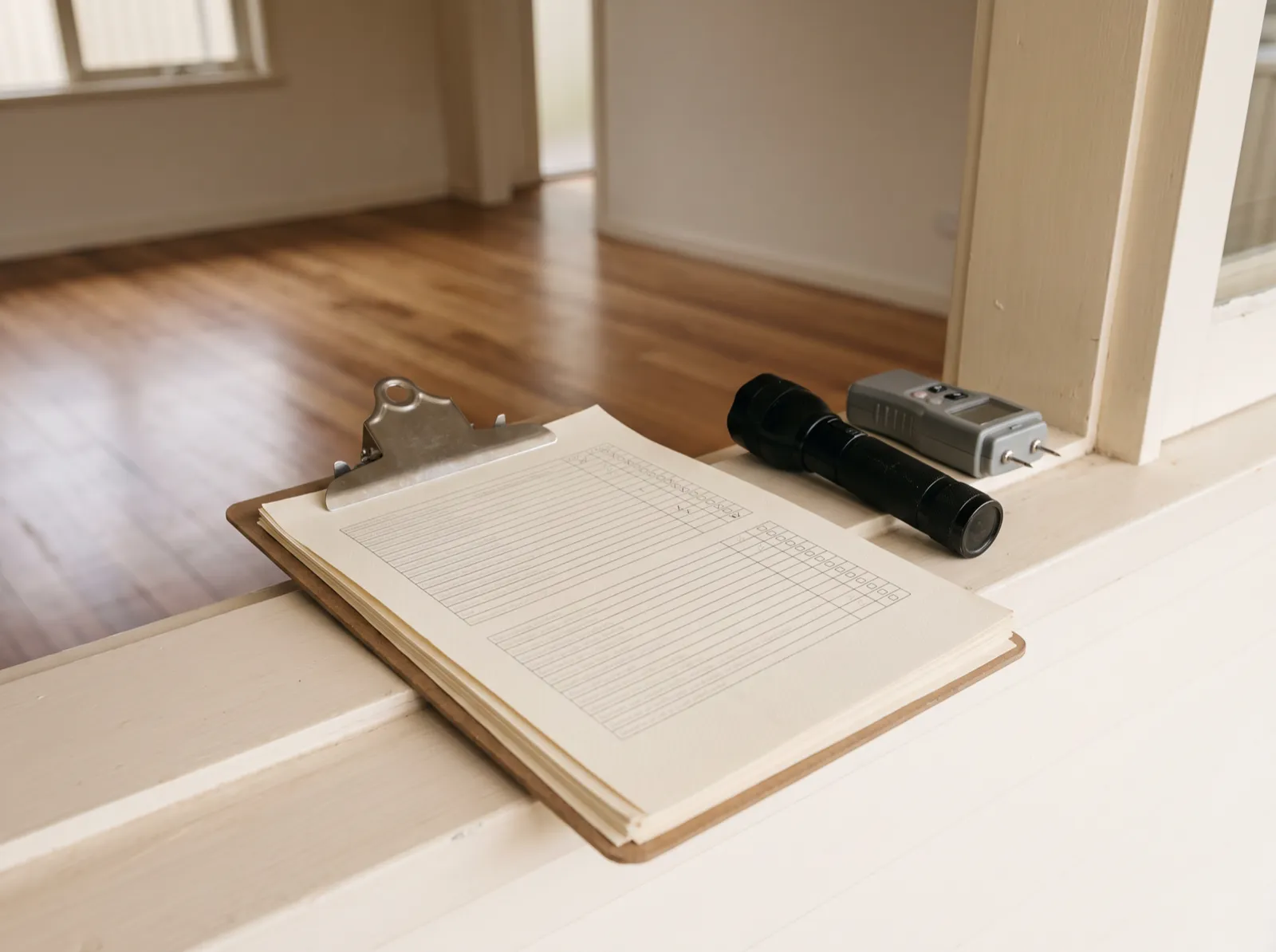
Where this sits in your purchase
The inspection is worth most before you are locked in, so the timing question is the first one to settle. In New South Wales that hinges on how you are buying, and the two paths are quite different. Get this in the diary and the rest is straightforward.
Buying by private treaty. The strongest position is to book the inspection before you exchange contracts, so the report informs the offer. If the pace has run ahead of that, New South Wales gives a private-treaty buyer a cooling-off period after exchange, five business days as standard, and the inspection belongs squarely inside it. A timber pest problem found in that window is a real reason to renegotiate or step back, on paper, before the period ends.
Buying at auction. There is no cooling-off period at auction. The hammer falls and you are bound, so the timber pest inspection has to be done in the days before auction day, not after. It costs a modest sum on a house you might not win, and it is still the cheaper mistake to make.
Either way, tell us the date. Put your exchange or auction date in the enquiry and the inspection is planned around it. The report is written up promptly after the inspection, so it is in your hands while the decision is still open. Cooling-off rules and their exceptions are set out by NSW government, buying a home.
Line these up early, not on the last afternoon.
The urgency is real, but rushing is what the pressure wants from you. An inspection booked with a day or two of room gives the technician time to get under the house properly and gives you time to read the report instead of skimming it. Here is the short list worth having in the diary before you commit.
- The timber pest inspection, to AS 4349.3, before exchange or inside the cooling-off period.
- A separate building inspection. Timber pest and building are two different reports, often booked together but never the same thing.
- The strata report, if it is a unit or townhouse, for the common-property and building history.
- Your solicitor or conveyancer briefed, so a finding can be acted on inside the deadline that matters.
- The exchange or auction date noted here, so nothing gets booked too late to use.

What a timber pest inspection covers
"Timber pest" is a wider net than termites alone. The AS 4349.3 inspection is a methodical look for four kinds of trouble, three of them living and one of them a set of conditions that invites the others. Termites are the headline, but the borer damage and the quiet rot are the ones a hurried look misses.
Subterranean termites
The white ant. Mud leads on a pier, hollow-sounding timber, discarded wings on a sill. The most destructive of the four on this coast, and the reason a subfloor is read first. A live find is left undisturbed and reported, never poked at during a sale.
Timber borers
Beetle larvae that tunnel seasoned timber and leave fine powder and small round exit holes in flooring, joinery and furniture. Most species do slow, minor damage; a few matter. The report says which you are looking at.
Wood decay fungi
Rot. Where timber stays damp it breaks down and softens, in a subfloor, a wet area, a leaking eave. It reads as a building fault but it is a timber pest, and it often sits alongside the moisture that termites want too.
Conducive conditions
Not a pest, but the invitation. Moisture against the house, timber-to-soil contact, a garden bed over the slab edge, poor subfloor ventilation. Read to AS 3660.2, because half of buying well is knowing what the previous owner left for you to fix.
Where the inspection goes
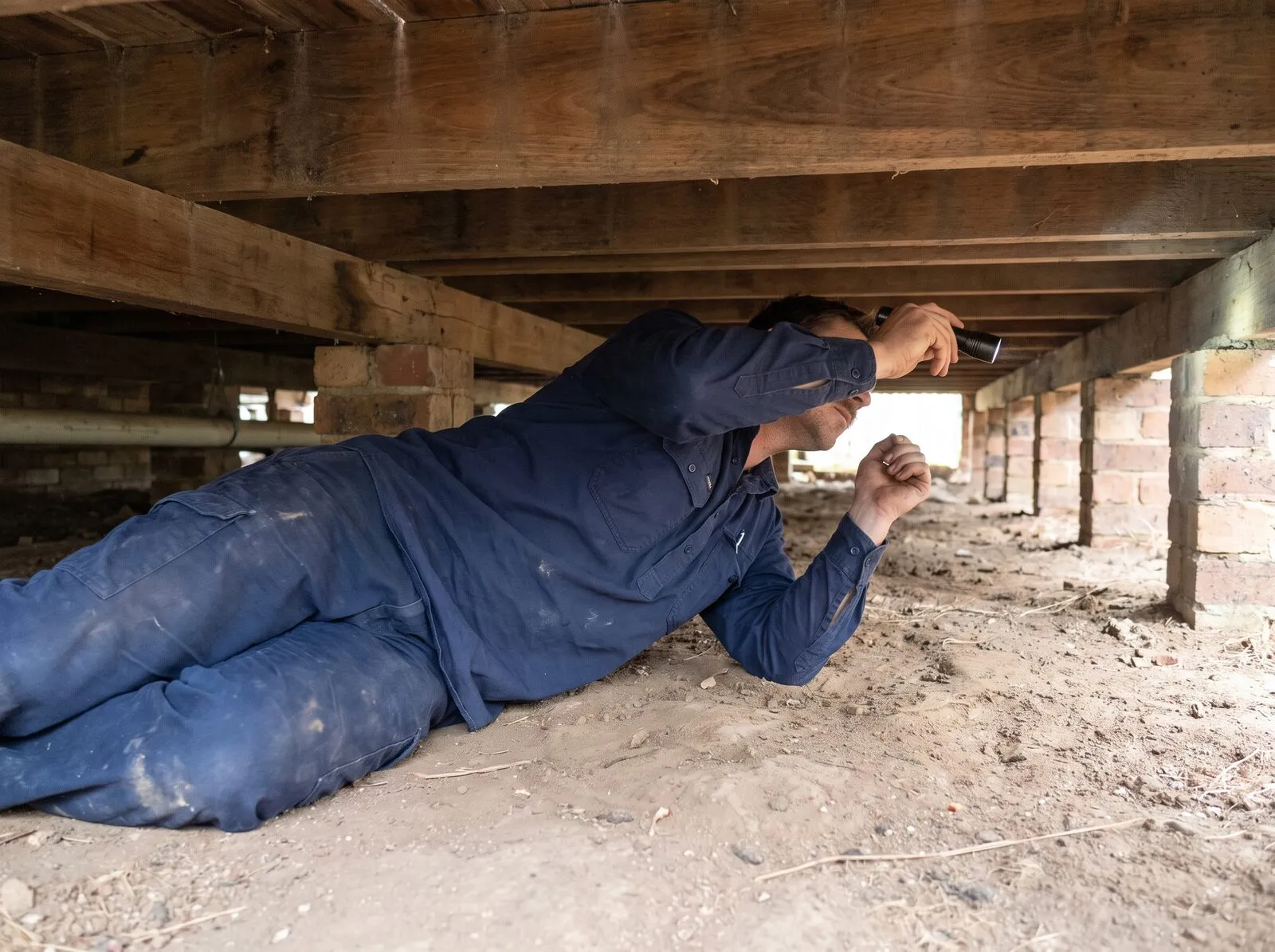
The subfloor and piers first, then the roof void, then room by room across skirtings, wet areas and joinery, and finally the grounds: fences, decks, retaining walls, stored timber and the garden beds built against the house. In a Hunter house the story is usually underneath or out the back, which is exactly where a quick walk-through does not go.
What the report actually tells you
This is the thing you are paying for, so it is worth knowing its shape before it lands. An AS 4349.3 timber pest report is not a yes-or-no verdict. It is a written record of what was found, what could not be reached, and what it means for the decision in front of you. The two sections buyers skip, what could not be inspected and the conducive conditions, are usually the two that matter most.
Read it with your solicitor. A clear report is good news you can act on; a report full of "further inspection recommended" is not a scare, it is the honest edge of what a visual inspection can see, and it tells you exactly where to look harder before you sign.
Property and inspection detail
Address, date, who inspected, and the weather and conditions on the day, which affect what could be seen.
Areas inspected
Subfloor, roof void, interior, exterior, grounds: each recorded as looked at or not.
Areas not inspected
What was inaccessible and why: a sealed cavity, a full subfloor, stored goods, fixed floor coverings. The honest limit of the day, in writing.
Timber pest activity
Live termites, borers or decay found, where, and whether active or old. A live termite find comes with the leave-it-alone instruction.
Timber pest damage
Damage attributed to past or present activity, and a plain note on its extent as far as a visual look allows.
Conducive conditions
The moisture, drainage and timber-to-ground issues that invite pests, to AS 3660.2. Your list of what to fix.
Overall assessment and recommendations
The summary, whether further invasive inspection is advised, and a sensible date to inspect again.
Scope and limitations
What the report is and is not: a visual timber pest inspection, not a structural or building report, and not a guarantee.
The anatomy of a report of this kind. Your report describes your house; nothing above is a finding.
The honest fine print
An inspection is not a guarantee. It is a careful visual assessment of what can be safely reached on the day, using a moisture meter and a thermal camera to read what a torch cannot. No inspection sees inside a sealed wall or under a slab, which is why a clear report still comes with a recommended date to look again. Anyone selling you certainty about a house they have looked at for an hour is selling you something that does not exist.
Timber pest and building are two jobs. This inspection is about termites, borers and decay. It is not a building inspection and does not report on structure, wiring or plumbing. Most buyers book both, often on the same visit; just know you need the two reports, not one.
The agent's inspection is the agent's. If a report is offered with the property, read who commissioned it and when. A report arranged by the seller answers to the seller. Your own inspection, arranged by you, answers to you, and that is worth more than the fee saved.
Timber pest work is licensed. A pre-purchase timber pest inspection is carried out by a technician whose licence carries the timber-pest endorsement, not a general handyman check. It is worth knowing the difference before anyone crawls under a house you are about to own.
Asked by buyers
How fast can it happen, and when do I get the report?
Inspections are booked to your contract date rather than a fixed queue, so tell us the deadline in the enquiry and we plan around it. The written report follows promptly, so you are reading it while the decision is still open, not after.
Is this the same as a building inspection?
No. A timber pest inspection looks for termites, borers and decay, plus the conditions inviting them in. A building inspection looks at structure and defects. They are separate reports to separate standards, commonly booked together. You want both before you buy.
The agent says the house has already been inspected. Do I still need my own?
Read the report first: the date, and who paid for it. A seller-commissioned report can be genuine and still be months old or narrow in scope. Your own current inspection, commissioned by you, is the one that answers to you and covers the house as it is today.
It is going to auction. When should I book?
Before auction day, because there is no cooling-off period at auction: once the hammer falls you are committed. Yes, it is a cost on a house you may not win. It is still far cheaper than exchanging on a place with a termite problem you could not walk away from.
The report found conducive conditions but no live termites. Should I still buy?
That is a common and workable result, not a red flag on its own. Conducive conditions are things like damp against the house or a garden bed over the slab edge, and most are fixable. The report becomes your to-do list and, sometimes, a point to raise on price. Your solicitor helps you weigh it.
Can you inspect a unit or apartment?
Yes. The inspection covers the lot you are buying and the accessible common areas around it, and it reads alongside the strata report rather than replacing it. Say in the enquiry that it is a unit and we will tell you what can and cannot be reached.
- NSW Government, Buying a home. The cooling-off period for a private-treaty purchase and the fact that auction sales have none, the timing this page rests on.
- Australian Museum, Termites. The reference for termite biology behind the timber pest the inspection looks for first.
- NSW EPA, Pesticide licences. The NSW licensing scheme for pest management technicians, under which timber pest work carries its own endorsement.

Tell us what you have seen
A description and a suburb is enough. A licensed technician reads every enquiry, works out what the job needs, and comes back with a straight answer and a free quote. No obligation, no pressure.