
Spider control in Newcastle and the Hunter
Two calls make up most of this page. One is a red-marked spider found in the garage, the shed or a box of stored gear, and the worry about kids and pets that comes with it. The other is a bush-edge block where the webs come back across the eaves and garden every warm night. This page tells you which spider you are looking at, what it is doing in your yard, and what actually keeps it down.
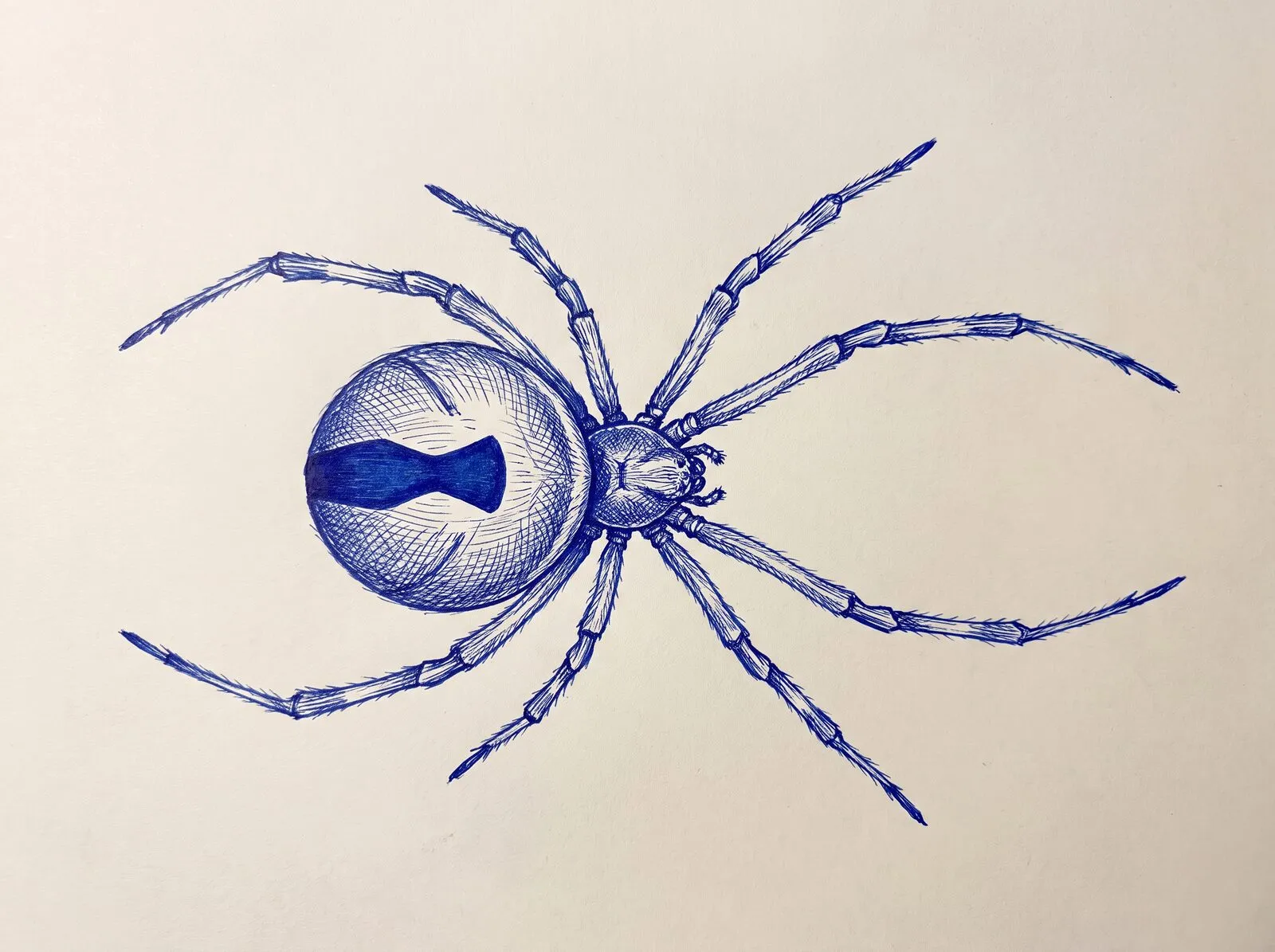
The sign you actually saw
- A round black spider with a red mark, tucked in a dry gap
- The redback, and the female is the one that matters: a body about the size of a pea, a red or orange stripe down the top of the abdomen, a red hourglass underneath. Males are tiny and rarely noticed. If it is round-bodied, black, and sitting still in a sheltered spot, treat it as a redback until proven otherwise.
- A messy, strong web low to the ground
- A redback's web is not a neat wheel. It is a gluey criss-cross tangle anchored to the ground under an object, with a dry retreat up in the top. Where the web is, she is. This is the web to look for around a garage floor, a pot rim or a fence base.
- Cream, pea-sized silk balls in that web
- Egg sacs. One female hangs several, and each holds a lot of spiderlings. This is why a quiet corner goes from one spider to many across a single warm month, and why a treatment that leaves the egg sacs behind does not hold.
- A neat wheel web across a path or between shrubs
- A garden orb-weaver or a St Andrew's cross spider, strung at head height and rebuilt most nights. Startling to walk into in the dark and essentially harmless. A nuisance on a bush-edge block, not a danger.
- A big flat fast spider on the wall, no web
- A huntsman. Alarming and harmless, indoors on a warm night, and it hunts the insects you like less. It does not need a treatment, though we understand if you would rather it moved on.
- A silk-lined burrow or funnel with trip-lines in damp ground
- Handle this one differently. It is the kind of spider to identify from a safe distance and never touch. Read the fine print below before you go anywhere near it.

What they are doing in a Hunter yard
A redback wants what a Hunter backyard offers in bulk: a dry, sheltered, undisturbed gap with insects passing by. The garage is the classic address, but so is the underside of outdoor furniture, the rim of an upturned pot, the inside of a folded trampoline frame, the meter box, the letterbox, the gap under the barbecue and the dark half of a stored box. The fence gives them a run, the dry side of a paling, the cap of a post, the bracket behind a Colorbond rail. They do not chase anyone. They sit and wait, which is exactly why the real risk is a hand reaching blind into stored gear, not a spider crossing the lawn.
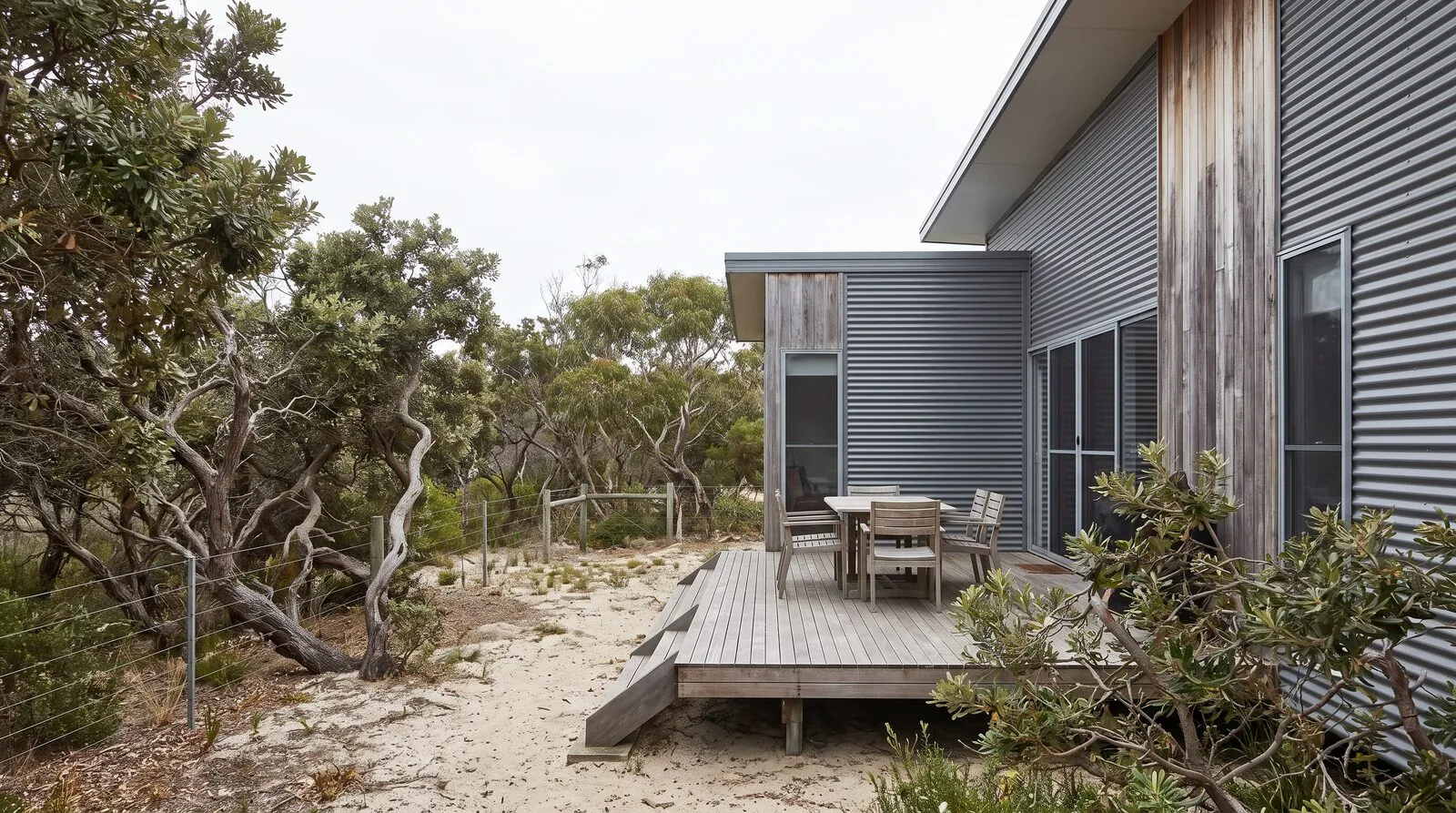
West of Jesmond the bush edge changes the mix. Wallsend, Fletcher and Elermore Vale back onto reserve, and out toward Port Stephens it is sand and banksia right to the boundary fence. Closer to the vegetation line you get more of everything: more webbing spiders spinning across the eaves and garden each night, and more redbacks pushing in from the reserve into sheds, retaining walls and woodpiles. Same spiders, heavier pressure, and a first look that always starts at the boundary and works in.
Spiders are a warm-season job. Numbers build through spring, peak over summer as the egg sacs hatch, and taper off in the cool. A treatment going into spring gets ahead of the season instead of chasing it through January.
What actually keeps them down
A spider treatment that holds has three parts. The one people skip is the third, and it is why the cheap version is back by Christmas.
Walk it and knock it down first
We go over the outside before anything is applied: eaves, window and door frames, the meter box, the fence line, the garage and shed, the subfloor edge and the spots under the outdoor furniture. Webs and egg sacs come down as we go, because a treated web with a live egg sac still under it is next month's problem, not this month's fix.
Treat where they shelter, not where you walk
A surface treatment goes onto the harbourage bands, the eaves, weep holes, window frames, fence caps and rails, and the inside of the garage and shed. The point is to put the product where a spider rests and travels so it keeps working over the weeks after we leave, rather than a one-day knockdown that the reserve refills.
Keep the clutter honest
We cannot treat the inside of a sealed box or the middle of a pile of gear, and we will say so plainly. A garage that gets a rough clear-out, pots up off the floor and firewood away from the wall, is the difference between a treatment that holds through summer and one quietly undone by the store-room by June.
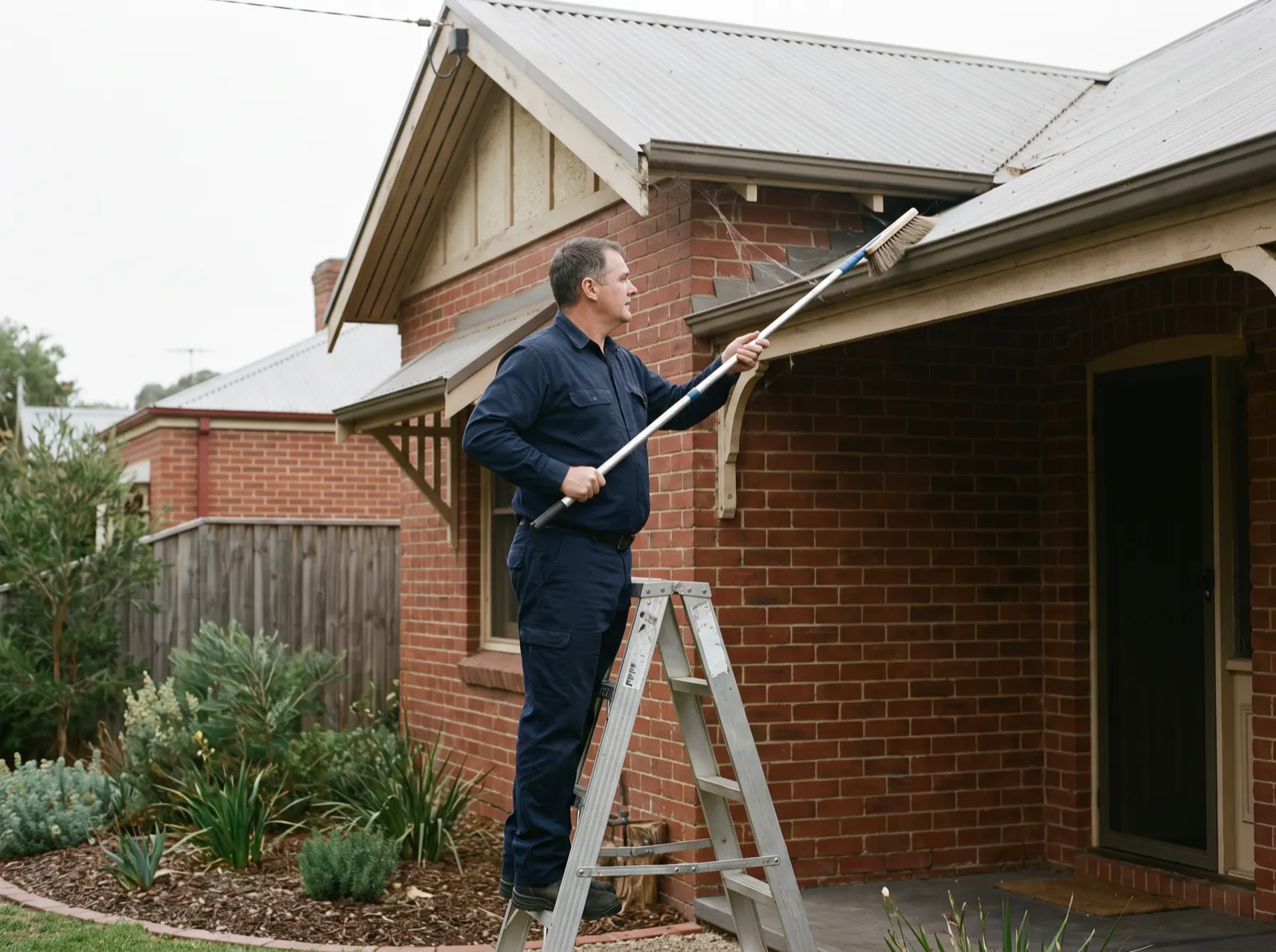
We reduce spider pressure, we do not sterilise a backyard, and anyone promising a spider-free block is selling you something. Illustrative photo; methods described generically, every job quoted on what your yard needs.
The honest fine print
Do not handle a redback, and do not test it. A redback bite is a genuine medical matter, and harder on children and the elderly. If you find one, the safe move is to leave it be, keep kids and pets clear, and book the treatment. If someone is bitten, that is a call to a doctor or the Poisons Information Centre, not to us. We treat the spider, not the person.
The funnel-web question, answered straight. The spider people fear on the ground is the funnel-web, and it is worth being accurate. The Australian Museum puts the Sydney funnel-web's main range well south of here, from the Central Coast down to the Georges River, so the Hunter sits at the far northern edge of it, and after a 2025 reclassification the large funnel-web-type spiders recorded around Newcastle may be a separate species. What that means for you is simple: a dark, heavy-bodied spider in a silk-lined burrow with trip-lines, usually in damp ground after rain, is one to identify from a safe distance and never touch. If that is what you are seeing, say so in the enquiry and we will treat it as the priority it is.
A huntsman is on your side. Big, flat, fast, no web, indoors on a warm night. Harmless, and it hunts the insects you would rather not have. We are happy to move one on, but it is not a treatment job.
One treatment is not a force field. A surface treatment holds for a season, not forever, and a bush-edge block will see spiders return sooner than an inner-suburb one. Many households here book once a year going into spring. We will tell you honestly what your yard is likely to need rather than lock you into a plan you do not.
Asked every summer
Is it a redback or something harmless?
The redback is small, round-bodied and black, sitting in a messy web in a dry sheltered spot, with a red or orange stripe on top and a red hourglass underneath. The big leggy spider on the wall is a huntsman, and the neat wheel web across the garden is an orb-weaver. Both look scarier and neither is the danger. If you are unsure, take a photo from a safe distance and tell us where you found it in the enquiry.
I found redbacks around the kids' bikes and play gear.
That is the call we take most seriously, and the reason the garage and yard matter as much as the house. We knock down what is there, treat the harbourage, and go over the play equipment, sandpit surrounds and stored bikes specifically. Keep the kids and pets clear until it is done.
Do I need to empty the garage first?
It helps a lot. We can treat around stored gear, but we cannot treat the inside of a sealed box or the middle of a pile. A rough clear-out, and getting pots and boxes up off the floor, makes the treatment hold far longer. We will point out the spots worth sorting when we quote.
We are on the bush edge and get them constantly.
A block backing bushland at Wallsend, Fletcher or out toward Port Stephens will always see more than an inner-suburb one, because the reserve keeps sending them. The realistic goal is keeping the numbers and the risky spots down, usually with a treatment going into each spring. We would rather be straight about that than promise a bush block something it cannot keep.
Will the treatment hurt the garden or the dog?
A licensed technician picks the product for the situation and places it deliberately, and we talk through the pets, the veggie patch and the chooks before we start. There is no blanket pet-safe spray. There is careful product choice, placement out of reach, and drying time. Tell us what is in the yard in the enquiry and it is planned around from the start.
- Australian Museum, Redback Spider. The identification marks this page leans on (the female's red dorsal stripe and the hourglass beneath) and the dry, sheltered harbourage it describes.
- Australian Museum, Sydney Funnel-web Spider. The range statement in the fine print, from the Central Coast to the Georges River, and the note that the Newcastle-area taxonomy is unsettled.
- NSW EPA, Pesticide licences. Spider treatment around a home is licensed pesticide use in NSW; this is the scheme that governs pest management technicians.

Tell us what you have seen
A description and a suburb is enough. A licensed technician reads every enquiry, works out what the job needs, and comes back with a straight answer and a free quote. No obligation, no pressure.