
Bed bug treatment in Newcastle and the Hunter
Waking up with bites in a neat little row is unsettling, and the first thing worth knowing is that it has nothing to do with how clean your house is. This page tells you how to be sure it really is bed bugs, why the supermarket spray usually makes the job bigger, and how a treatment that actually works is done.
The sign you actually saw
Bites are what send people looking, but bites never confirm bed bugs on their own. The proof is on the bed, not on your skin.
- Bites in a line or a small cluster
- The classic pattern is two or three bites in a row, sometimes called breakfast, lunch and dinner, on the parts you leave uncovered while you sleep: arms, shoulders, neck, back. But reactions vary enormously. Some people welt up badly, others in the same bed show nothing at all, so a line of bites is a reason to look, not an answer.
- Dark spots along the mattress seams
- Small full-stop marks in dark ink, like someone flicked a fine pen along the piping and seams of the mattress and base. This is digested blood, and it is the sign that actually confirms bed bugs. It collects where they shelter, so it points to the harbourage as well as proving the problem.
- Rust or blood smears on the sheets
- A small reddish smear is one that was rolled on during the night. On pale bedding it is easy to miss until you know to look for it.
- Pale shed skins
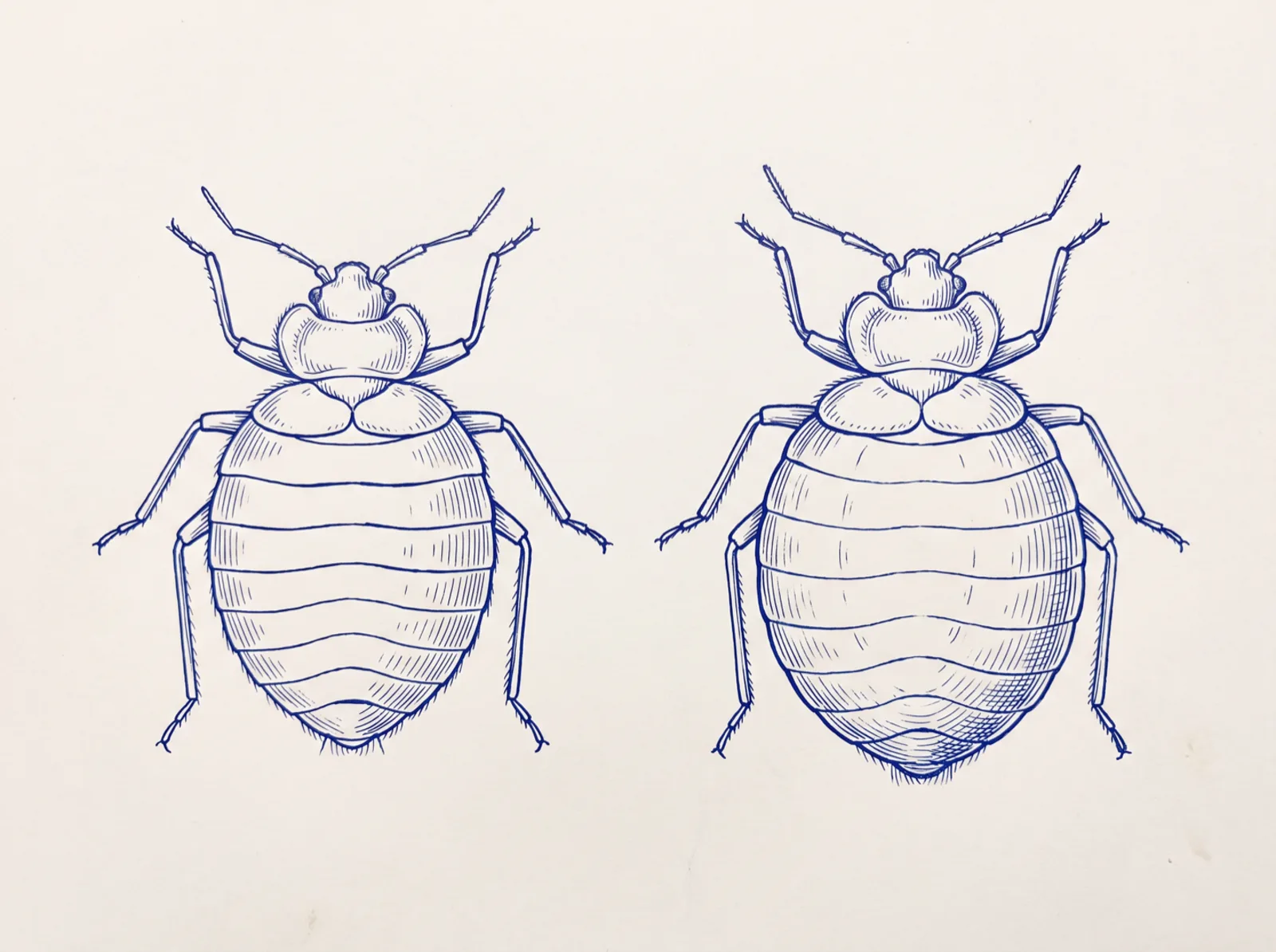
- Bed bugs moult as they grow and leave translucent apple-seed-shaped shells behind. They gather in the seam, in the frame joins and behind the headboard, and they mean a population, not a single hitchhiker.
- The insect itself
- Flat, oval, the size and colour of an apple seed, rust-brown, wingless. You find them in the mattress and base seams, the joins of the bed frame, behind the headboard and in the skirting right behind the bed. Not on open surfaces, which is exactly why a surface spray misses them.
- A sweet, musty smell
- Only in a heavy, long-running case, and worth mentioning so you know it is a symptom of a big harbourage, not something you did.

Bed bugs are carried, not caught
Unlike most of what we treat, bed bugs have nothing to do with the house itself. They do not come up from the drains, live in the roof, or forage in from the garden. They are carried in, every time, on people and on the things people move. That is the one fact that makes the rest of this page make sense.
They travel. Bed bugs do not fly and do not jump; they hitchhike. A weekend away, a hotel or hostel room, a visitor's overnight bag, a bus or plane seat, and a few ride home in the luggage and set up within a couple of metres of where you sleep. Newcastle moves a lot of people through: the airport out at Williamtown, university terms filling and emptying share houses, and holiday lets up and down the coast that turn over every week.
Secondhand furniture. A kerbside couch, a marketplace bed frame, a hand-me-down mattress. It is the most common way one Hunter bedroom quietly becomes a problem. The seams, joins and screw holes that make old timber furniture worth having are the exact places a bed bug shelters. Anything secondhand is worth a proper look in daylight before it comes through the door.
It is not a cleanliness thing. Worth saying plainly, because the shame of it stops people calling early. A spotless home gets bed bugs the same way a cluttered one does: something carried them in. Clutter only matters because it gives them more places to hide, which makes the treatment harder, not because it caused them. Nobody needs to feel embarrassed to make the call.
What actually clears an infestation
The single thing that makes bed bugs harder and dearer to treat is the fortnight of supermarket spray that usually comes first. It is worth understanding why before you reach for a can.
Bed bugs shelter deep in tight cracks and only come out to feed. A repellent surface spray never reaches where they live. What it does is move them: sprayed skirting and bed frames drive the population out into fresh cracks, deeper into the wall, and into the next room. A problem that was one bed becomes three rooms, the survivors grow warier of the open, and the follow-up work is larger than the whole job would have been.
Inspect and confirm
Every harbourage gets found before anything is treated: the mattress and base seams, the frame joins, behind the headboard, the skirting and carpet edge behind the bed, cracked plaster and the power point nearby. We confirm it is bed bugs from the spotting and the insects, never from the bites, and we work out how far it has already spread. That map decides the treatment, so nothing is quoted sight unseen.
Treat where they live, more than one way
Bed bugs shrug off any single method, so a real treatment layers a few: heat, steam or a vacuum worked through the harbourage, then a considered application of a professional product into the cracks and seams where they shelter, chosen for the room and for who sleeps in it. Methods are described generically here; the exact plan is set at the inspection, and no product is a magic wand.
Prepare, encase and follow up
There is prep you do first, bedding through a hot wash and dry, the room cleared to expose the harbourage, and we tell you exactly what before we arrive. A mattress can usually be treated and zipped into an encasement rather than thrown out, which traps anything left inside and makes future checks easy. Then the honest part: eggs are shielded from most treatments and keep hatching for a week or two, so a planned follow-up visit is part of the job, not an upsell.
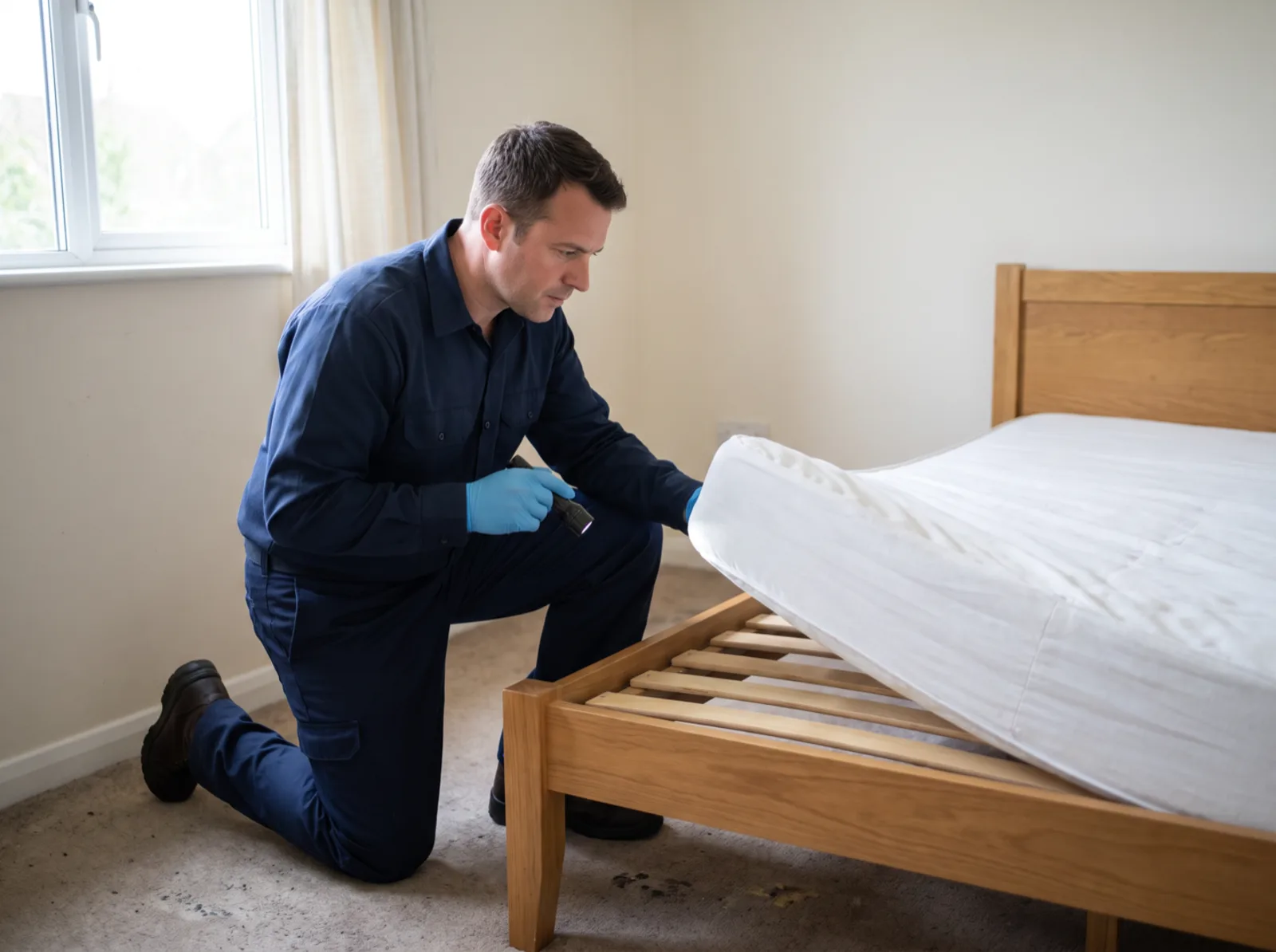
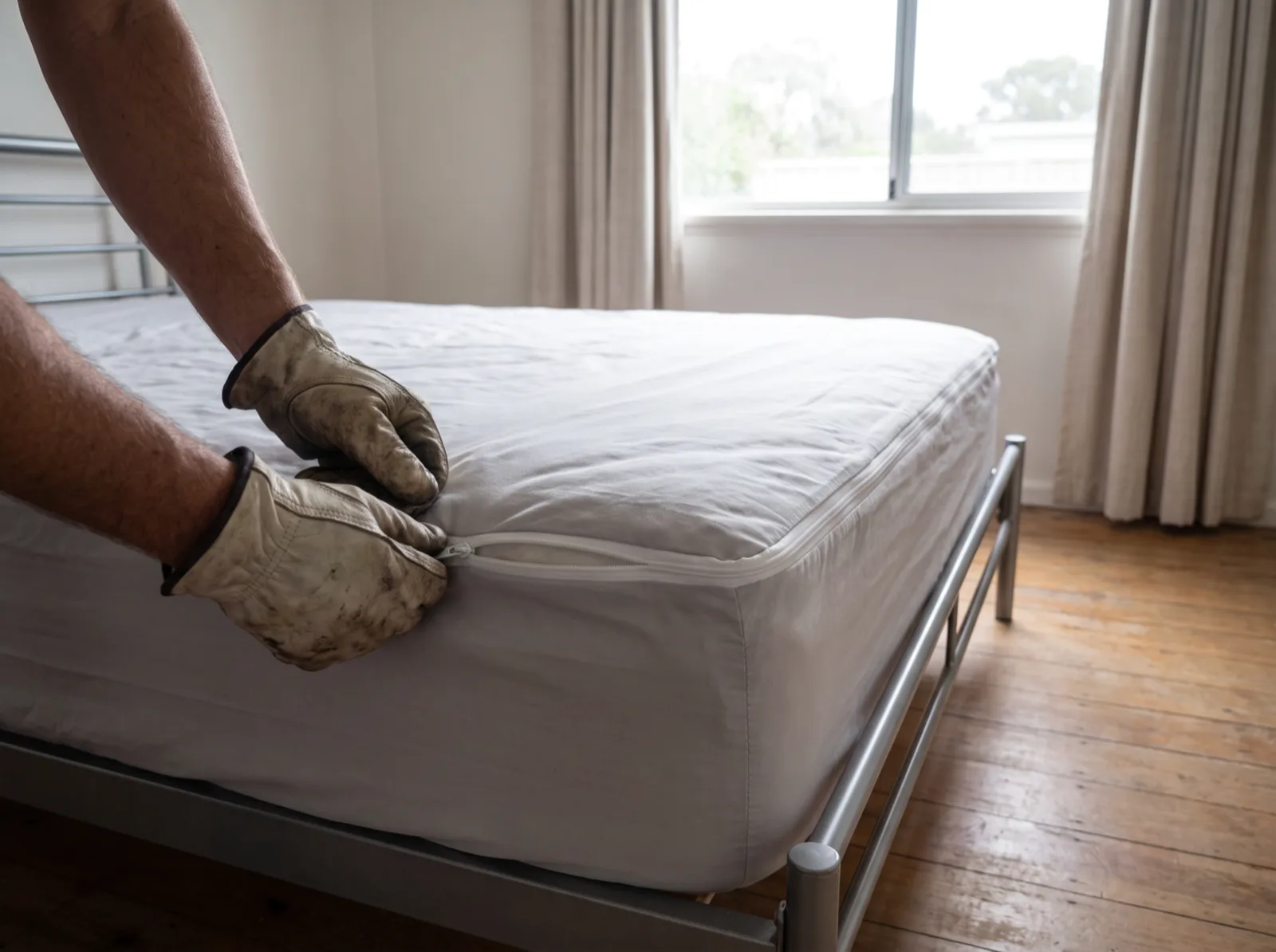
Illustrative photos. Methods described generically; every job is quoted on what your home needs.
The honest fine print
It is not about cleanliness. Worth repeating, because the embarrassment is what stops people calling while it is still one bedroom and cheap to fix. A bed bug does not care how tidy you are.
Bites confirm nothing. A doctor can rarely tell a bed bug bite from a flea or mosquito bite, and reactions differ from person to person in the same bed. We confirm from the insect and the seam spotting, never from the marks on your skin.
They carry no disease. Bed bugs are a nuisance, not a health hazard; the real cost is the itching and the lost sleep. That is not a reason to leave them, since they only ever multiply, but it is a reason not to panic. See the NSW Health note below.
Renting? Bed bugs in a rental are usually the landlord's to sort, but timing and cause matter, and shifting your own things around the house can spread them. Tell us it is a rental in the enquiry and we will steer you to the right door. The renting guide covers it plainly.
Asked when the bites appear
Is it bed bugs or fleas?
Fleas bite mostly around the ankles and lower legs, and there is usually a pet scratching to go with it. Bed bug bites cluster where you lie still: arms, shoulders, neck and back, often in a short line. But that is a hint, not proof. The dark spotting on the mattress seams is what settles it, and it is the first thing we look for. If there is a scratching dog in the picture, start with fleas and ticks.
I only found one. Do I really need treatment?
One found in a bed is worth acting on. They breed quietly, and a single mated female is a population within a couple of months. Catching it before it spreads past the bedroom is the cheapest this job ever gets, so it is exactly the moment to book, not to wait and watch.
Should I throw out the mattress?
Usually not. A mattress can be treated and encased rather than binned, and dragging an infested one through the house or out to the kerb is a reliable way to spread bed bugs through your own rooms and hand them to whoever picks it up. Ask us before you throw anything out.
Will you need to treat the whole house?
Not always. Caught early it is often the one bedroom and the space right around it. Where a supermarket spray has already scattered them, or in a share house with a live source next door, the treated area is larger. The inspection tells us which, and we tell you before we start rather than after.
Can I stay in the house during treatment?
In most cases yes, with some room-by-room prep and short re-entry times we will talk you through. You do not need to move out. The one thing not to do is start sleeping in a different room, because that just invites them to follow you and spreads the problem to a second bed.
- NSW EPA, Pesticide licences. Treating bed bugs around a home with a professional product is licensed pesticide use in NSW; this is the scheme that governs pest management technicians.
- NSW Health, Bed bugs. The state health note: bed bugs are a biting nuisance, not a disease carrier, and cleanliness is not the cause.
- Australian Museum, Insect bites and stings. Background on the bed bug and why a bite alone rarely identifies what caused it.

Tell us what you have seen
A description and a suburb is enough. A licensed technician reads every enquiry, works out what the job needs, and comes back with a straight answer and a free quote. No obligation, no pressure.