
Common household pests in the Hunter
This is the page the business is named for. Every pest a Newcastle or Hunter home actually gets, drawn plate by plate: what it looks like, the ones it gets mistaken for, the sign you probably saw, what it is doing in a house like yours, and what actually fixes it. Where a plate needs a licensed inspection rather than a can of spray, it says so plainly.
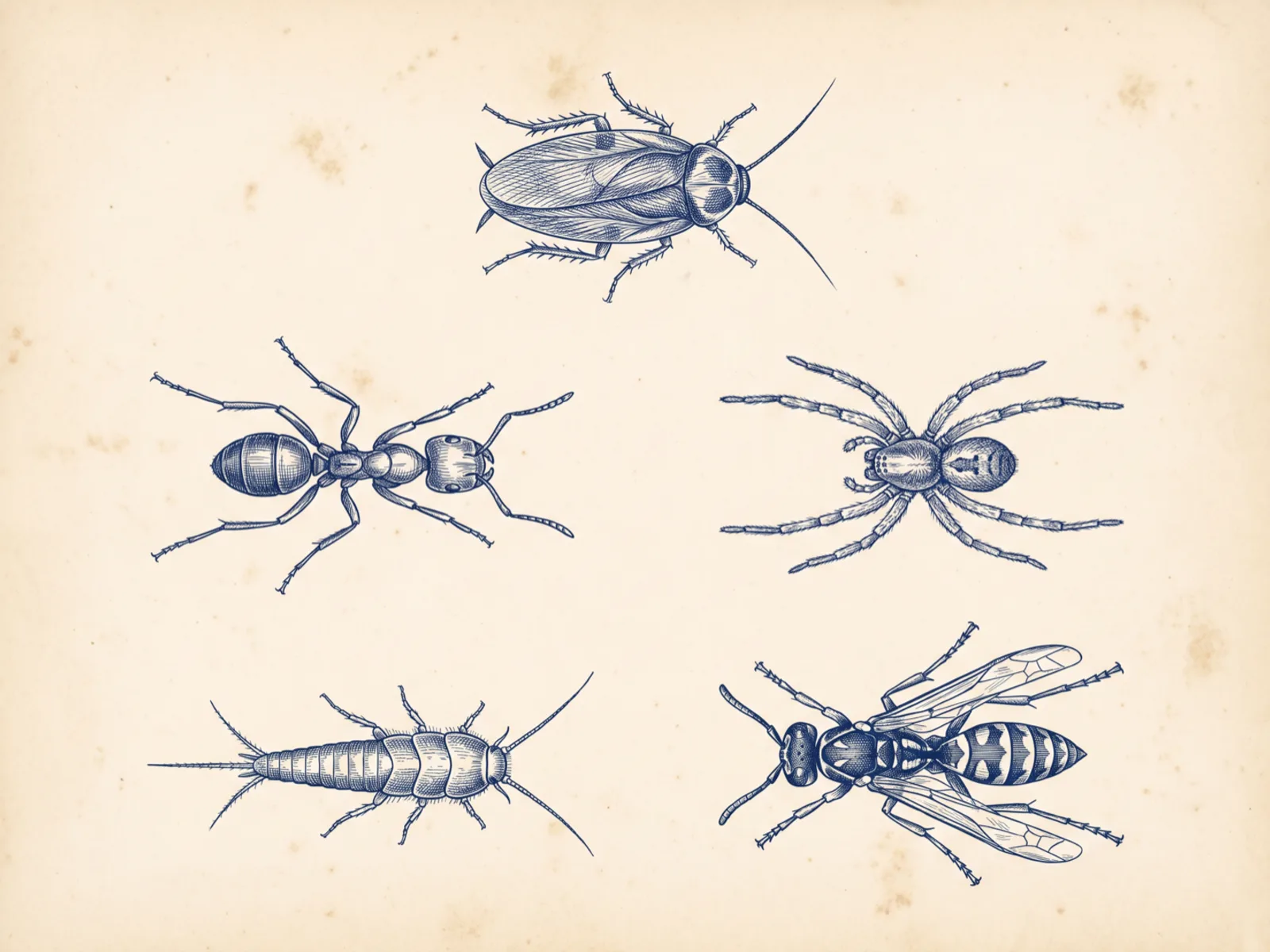
Start with the sign, not the species
Most people arrive here with a sign, not a name: a smear of droppings, a bite pattern, a mud line up a wall, a noise in the ceiling. The index reads by the sign for that reason. Find the row that matches what you saw, open the plate, and each one links through to the full treatment page. Two honest limits sit over the whole guide: a drawing narrows it down but only a licensed inspection confirms a species in your house, and anything termite-shaped you leave undisturbed and book, never poke.
- PL. 02CockroachesLive insects when the kitchen light goes on; peppery droppings in cupboard cornersActive Sep to May↓
- PL. 03AntsTrails along the bench edge; a soil ridge between pavers; a winged swarm after rainActive Sep to Apr↓
- PL. 10SilverfishYellow stains and grazed patches on stored paper, books and natural-fibre clothingYear-round↓
- PL. 04Rats and miceScratching overhead at night; droppings; a greasy rub mark along a beamPeak Apr to Sep↓
- PL. 12Possums and birdsA heavy, slow animal at dusk, not the fast night scurry; nesting over the eaveYear-round↓
- PL. 05SpidersAn untidy web low in a dry sheltered spot; a pea-sized black body with a red stripeActive Oct to Apr↓
- PL. 07WaspsA papery nest under an eave, or steady traffic into one point in a wall or the groundActive Nov to Apr↓
- PL. 08Fleas and ticksThe pet scratching; bites in clusters around the ankles; black specks in the beddingPeak Nov to Mar↓
- PL. 09Bed bugsBites in a line on skin you slept on; dark spots along the mattress seamYear-round↓
- PL. 11MosquitoesThe whine and dawn-and-dusk bites; larvae wriggling in any still water nearbyPeak Nov to Apr↓
- PL. 06TermitesPencil-thick mud leads up a wall or pier; timber that sounds hollow; wings on a sillYear-round↓
What lives where the food and the damp are
The three that share your kitchen, pantry and linen cupboard. Two want the warmth and the crumbs; one wants the still, humid dark.
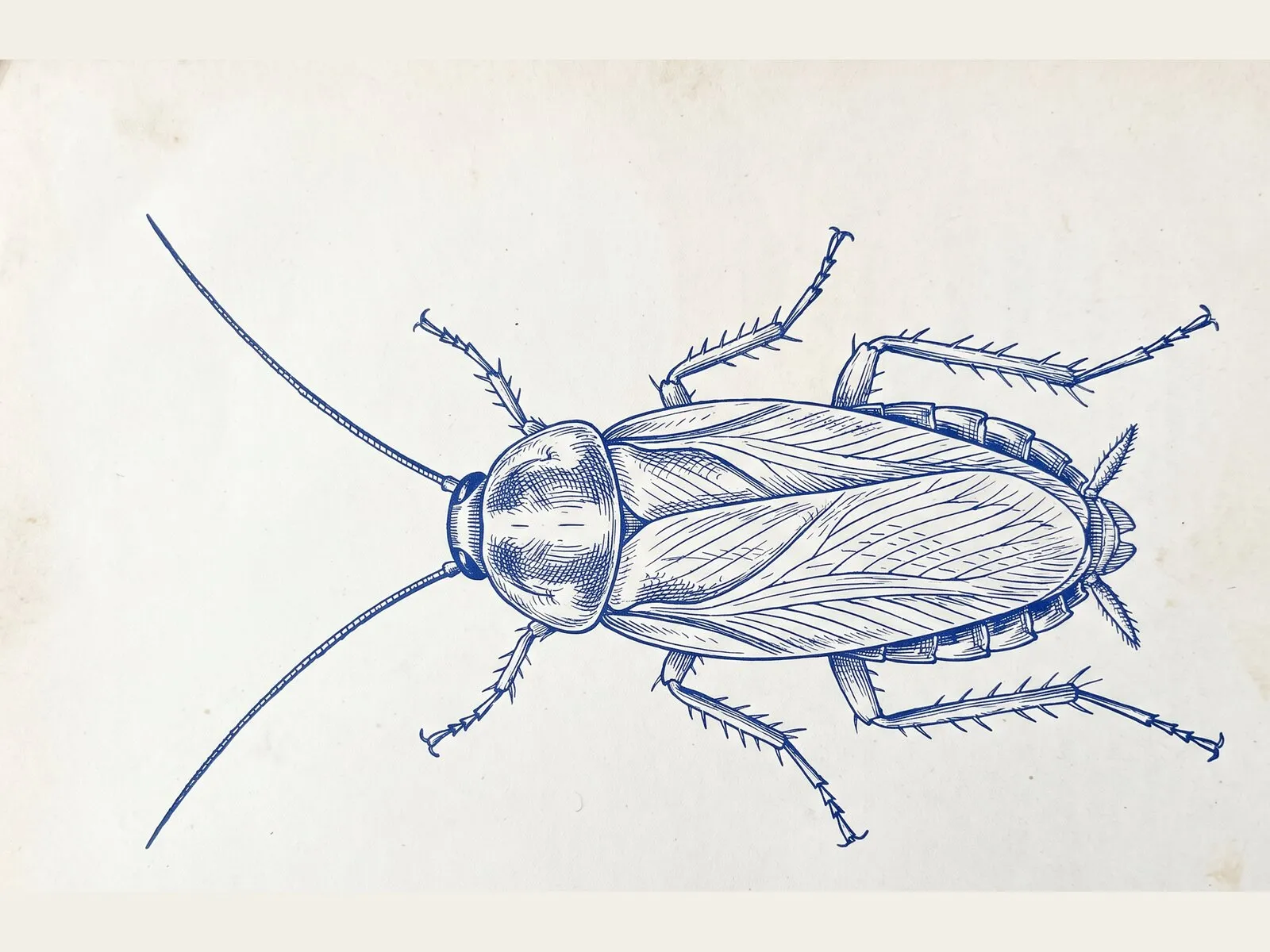
Cockroaches
Blattella germanica · Periplaneta spp.- Identify
- Two kinds turn up. The German cockroach is small and tan with two dark stripes behind the head and lives indoors near warmth and water. The big glossy brown-black ones (Australian and American cockroaches) are the drain and subfloor species that come up from below.
- Lookalike
- A native bush cockroach flies in through a window on warm nights and looks alarming, but it breeds outdoors and will not colonise a kitchen. The German is the one that stays and multiplies. Size and where it is settle it.
- The sign
- Live insects scattering when you turn the kitchen light on at night; a peppery smear of droppings in cupboard corners; small dark egg cases glued behind the kickboard.
- In a Hunter house
- German roaches arrive in cardboard, grocery bags and secondhand appliances, then set up in the warm cavity behind the oven and dishwasher. In a terrace row the shared wall lets them move between kitchens. The big drain species push up through old subfloors and gully traps after warm rain.
- What fixes it
- Gel bait worked into the harbourage, behind and underneath rather than sprayed across the bench, with the moisture and food source removed. In a terrace the honest fix treats both sides. A surface spray alone scatters them and misses the nest.
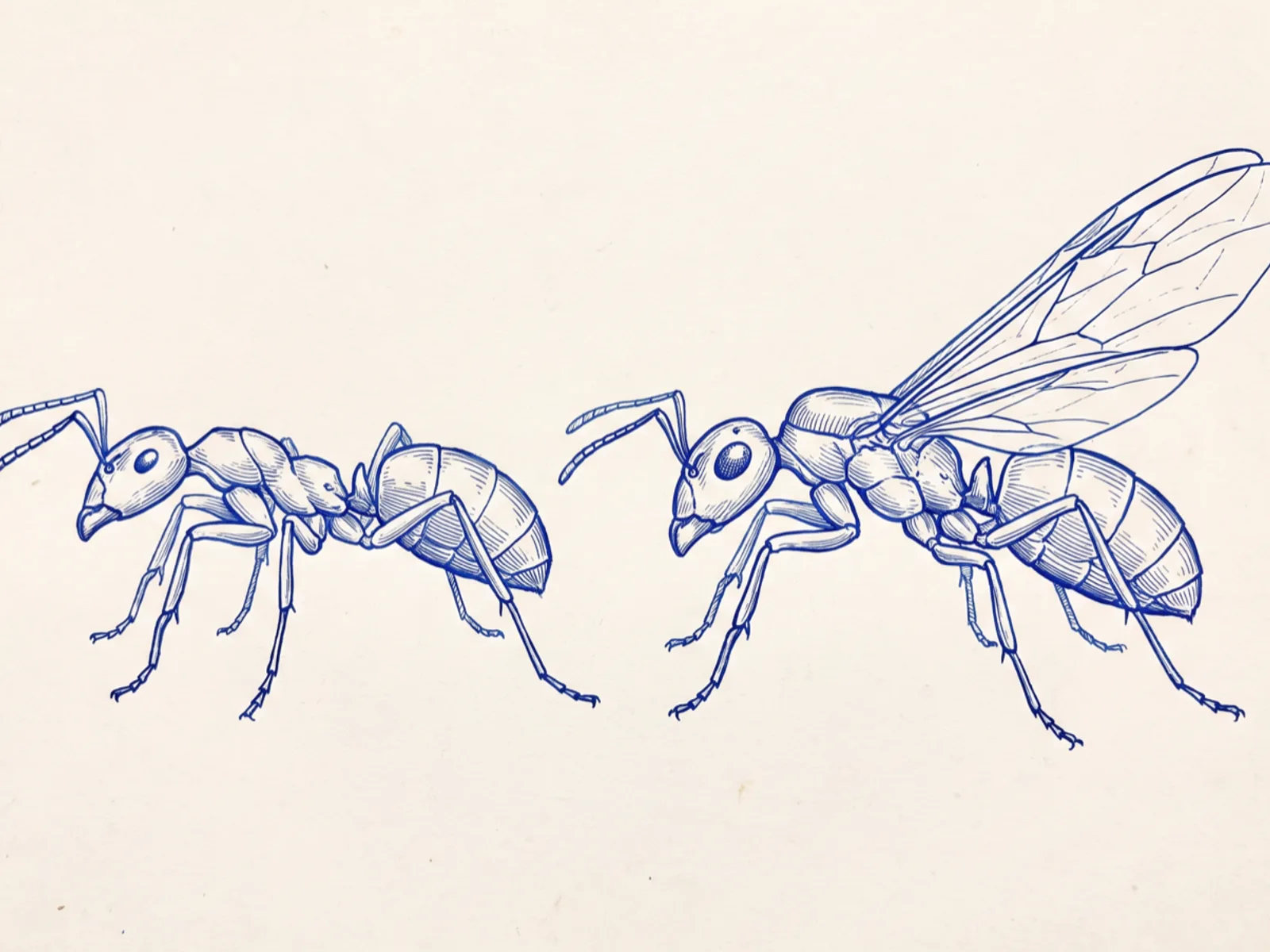
Ants
Family Formicidae- Identify
- A pinched waist and bent, elbowed antennae mark an ant. You usually meet them as a trail to a food source, a fine ridge of excavated soil between pavers, or a sudden pour of winged ants on a humid evening.
- Lookalike
- The winged swarm is the one people mistake for termites. An ant alate has a narrow waist, elbowed antennae and two pairs of wings of different sizes; a termite alate has a straight thick waist, straight antennae and four wings the same length. The flying ants or termites check settles it in five seconds, and it matters, one is a nuisance and the other is not.
- The sign
- Trails along skirting and bench edges; a nest mound in the lawn or between pavers; a swarm of winged ants gathering at a lit window.
- In a Hunter house
- They nest in wall cavities, under paths and in pot plants, and coastal warmth drives them hardest through spring and summer. Different species feed on different things, which is why one bait works and the next does nothing.
- What fixes it
- Bait the colony, not the trail. A spray kills the workers you can see and leaves the nest laying more; the lasting fix takes bait the workers carry home, matched to whether the species is after sugar or protein.
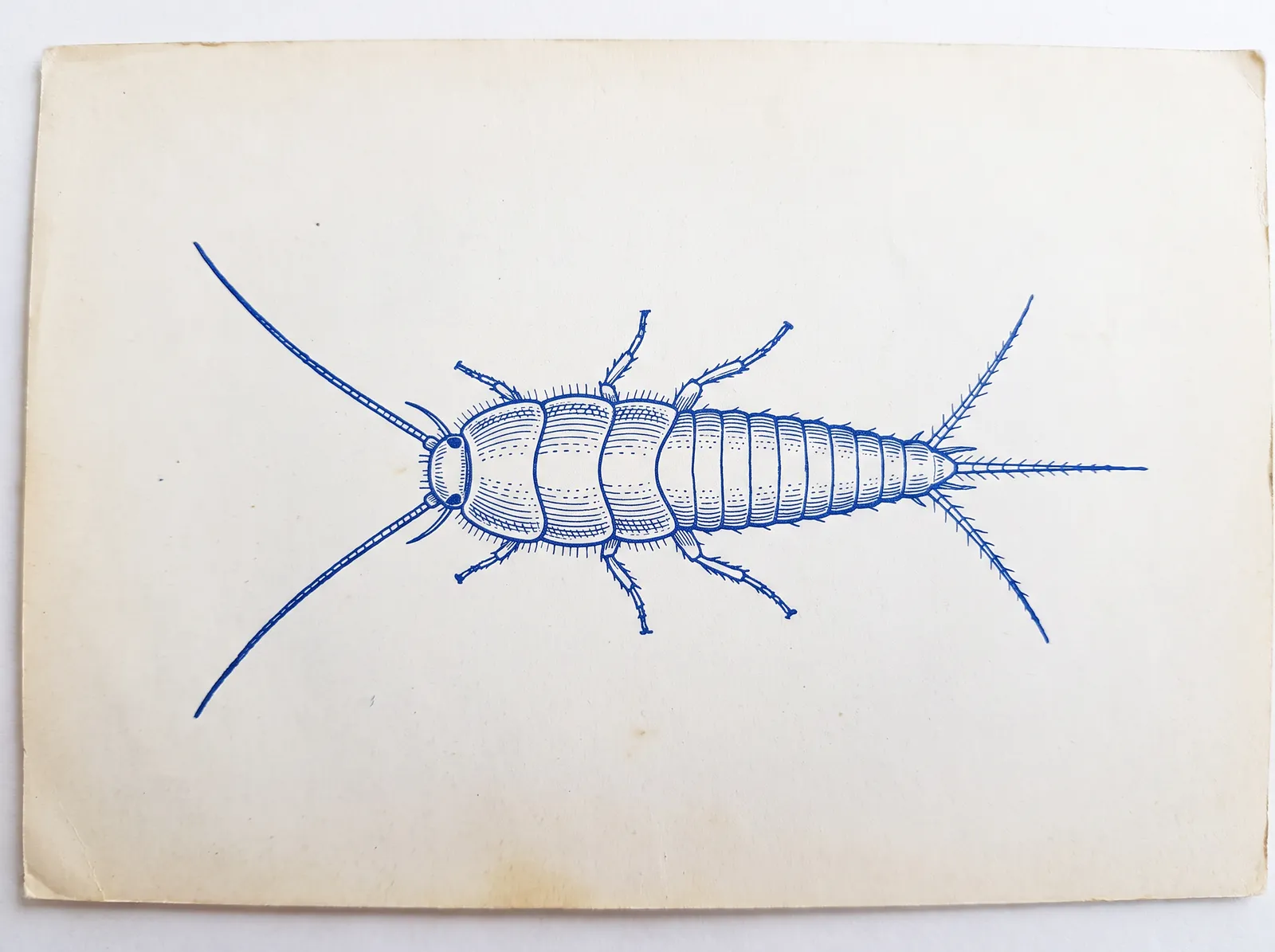
Silverfish
Lepisma saccharinum- Identify
- A small wingless silver-grey insect shaped like a teardrop or carrot, with three long tail bristles and two antennae, that wriggles like a fish and bolts from the light.
- Lookalike
- Their damage gets blamed on clothes moths and booklice. Silverfish graze the surface and leave a fine peppery scale and yellow staining; a clothes moth chews clean holes right through wool. Reading the damage tells you which one you have.
- The sign
- Yellowish stains and grazed patches on stored paper, wallpaper seams, book spines and natural-fibre clothing, plus the occasional silver insect in the bath or behind the skirting.
- In a Hunter house
- Humid coastal air and old plaster suit them, and they gather in the dark, still, slightly damp storage a house forgets about: the back of the linen cupboard, the boxes in the roof space, behind the bookshelf. Slow, quiet damage rather than a swarm.
- What fixes it
- Usually folded into a general treatment rather than booked separately: treating the harbourage, dropping the humidity, and clearing long-term paper and fabric storage so there is nothing left to graze.
What is making the noise above the ceiling
Both of these announce themselves overhead before you ever see them. Telling them apart is the whole first move, because one is a pest job and the other is protected wildlife.
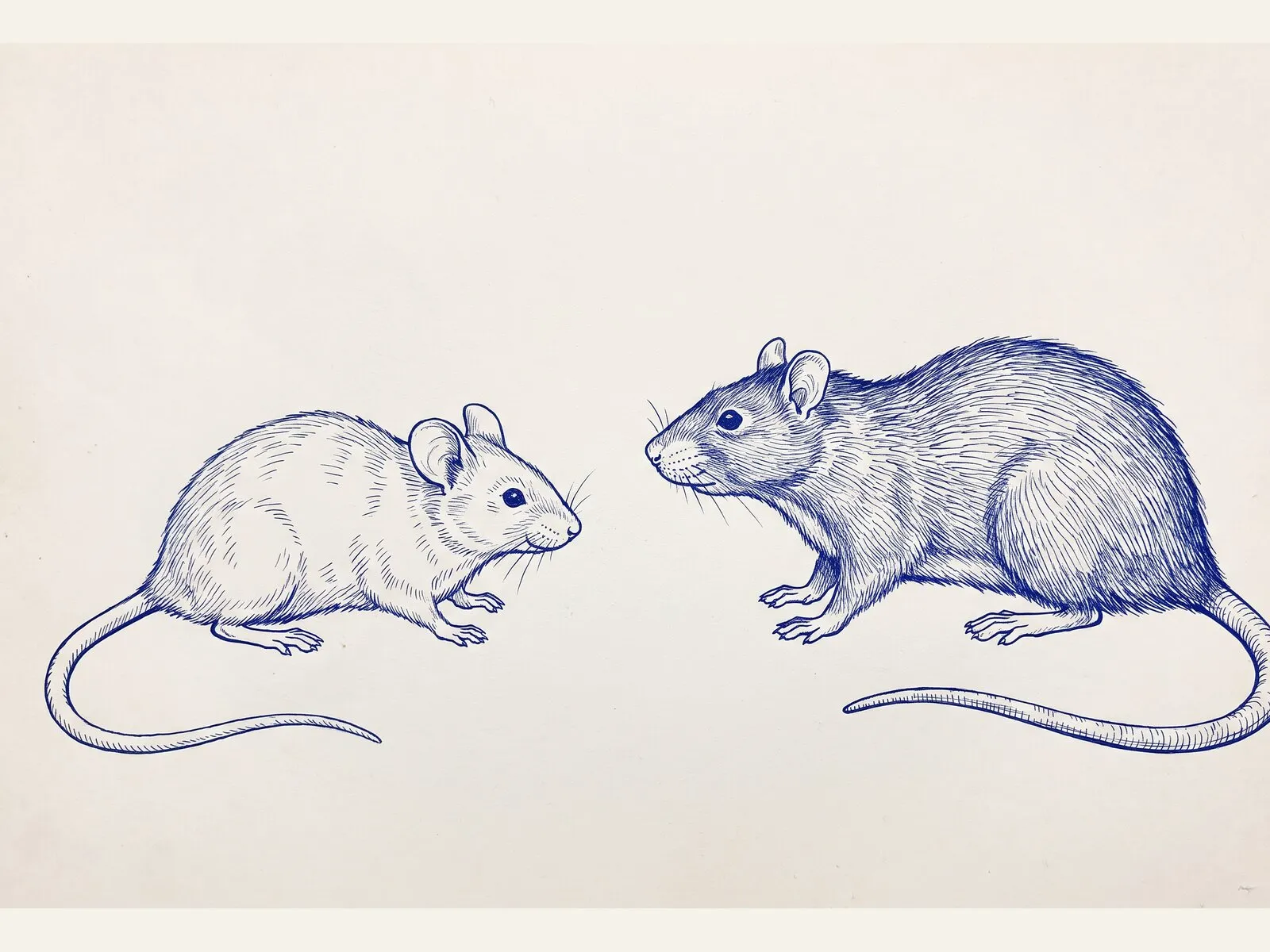
Rats and mice
Mus musculus · Rattus rattus · Rattus norvegicus- Identify
- A house mouse is small with big ears, a pointed nose and a thin tail. The black rat is the Hunter's roof specialist, sleek with a tail longer than its body. The brown rat is heavier and keeps to the ground, drains and subfloor.
- Lookalike
- The night noise misleads people. A light, fast scurry overhead is a rat; a slow, heavy drag or a single thump at dusk points to a possum, protected wildlife and an entirely different job. See PL. 12.
- The sign
- Scratching in the ceiling at night; droppings (rice-grain and scattered means mice, olive-pit size in regular runs means rats); gnaw marks on timber, cable or pipe; a greasy rub mark where they run the same beam every night.
- In a Hunter house
- Terrace roof voids connect into one long run; Federation weatherboards add cavities and subfloors. Autumn is moving-indoors season across the whole ring, and the weeks after heavy rain on the Maitland floodplain bring the biggest surges.
- What fixes it
- Find the runs and the entry points, bait or trap matched to the house, then proof the gaps so it stays fixed. Loose bait from the hardware shop poisons pets and owls and tends to die inside a wall.
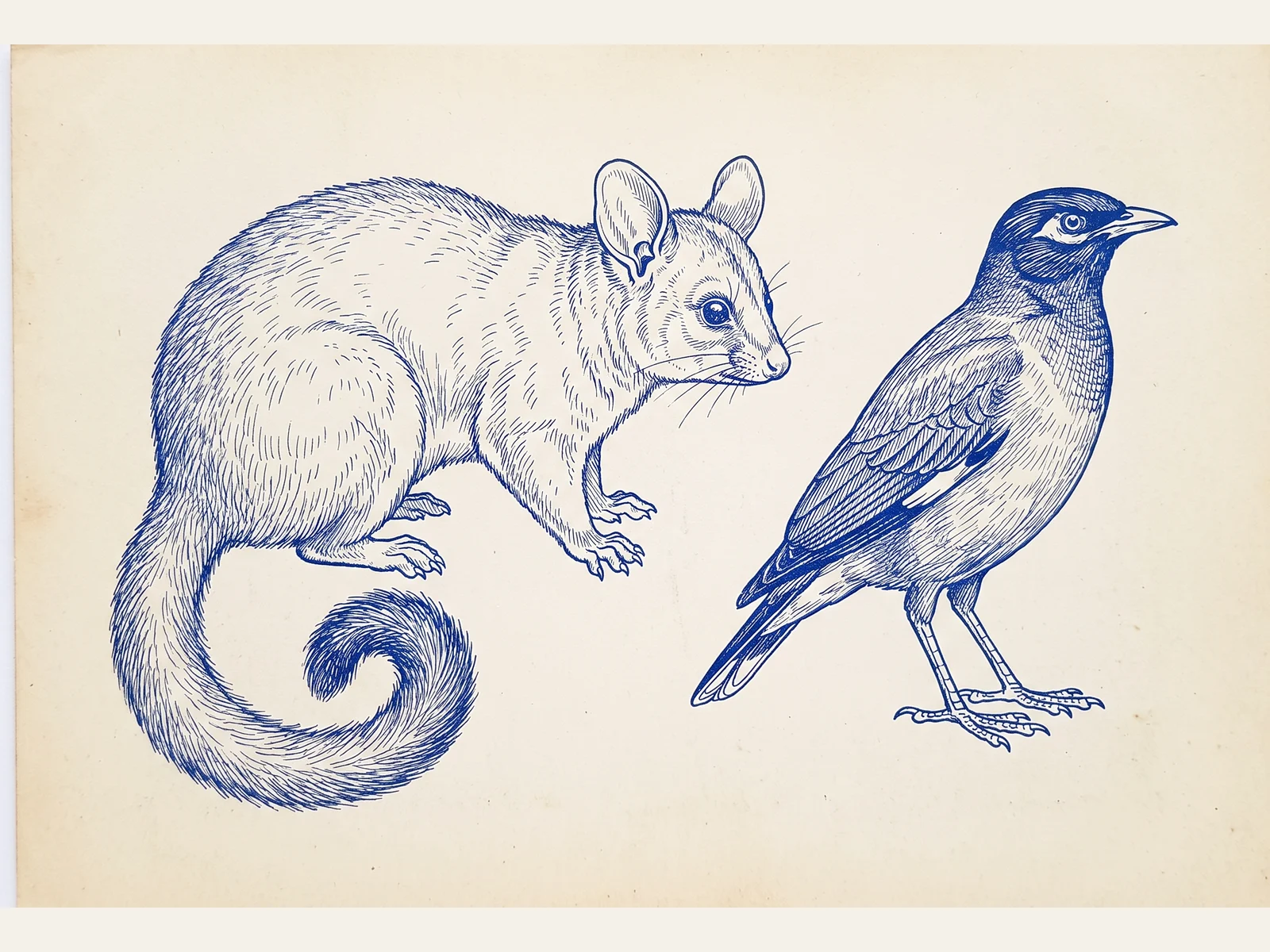
Possums and birds
Protected native wildlife- Identify
- A heavy animal moving slowly in the roof at dusk and dawn rather than the fast night scurry of a rat; a scratching, climbing entry over the eave; birds nesting in a gable vent or in under solar panels.
- Lookalike
- Mistaken for rats by the noise alone. The tell is weight, speed and timing: heavy, slow and at dusk points to a possum. See PL. 04 for the rodent version.
- Not a pest
- Possums and many native birds are protected in NSW. There is no baiting or extermination here, and there should not be. The lawful, lasting fix is exclusion, done by a licensed operator.
- What fixes it
- Find the entry, wait for the animal to leave for the night, then seal it, and where it makes sense provide an alternative such as a nest box so the animal does not simply force a new hole.
When the first sign is on your skin
These four you often feel before you see, and the bite pattern is half the identification. Reading it right saves treating the wrong thing.
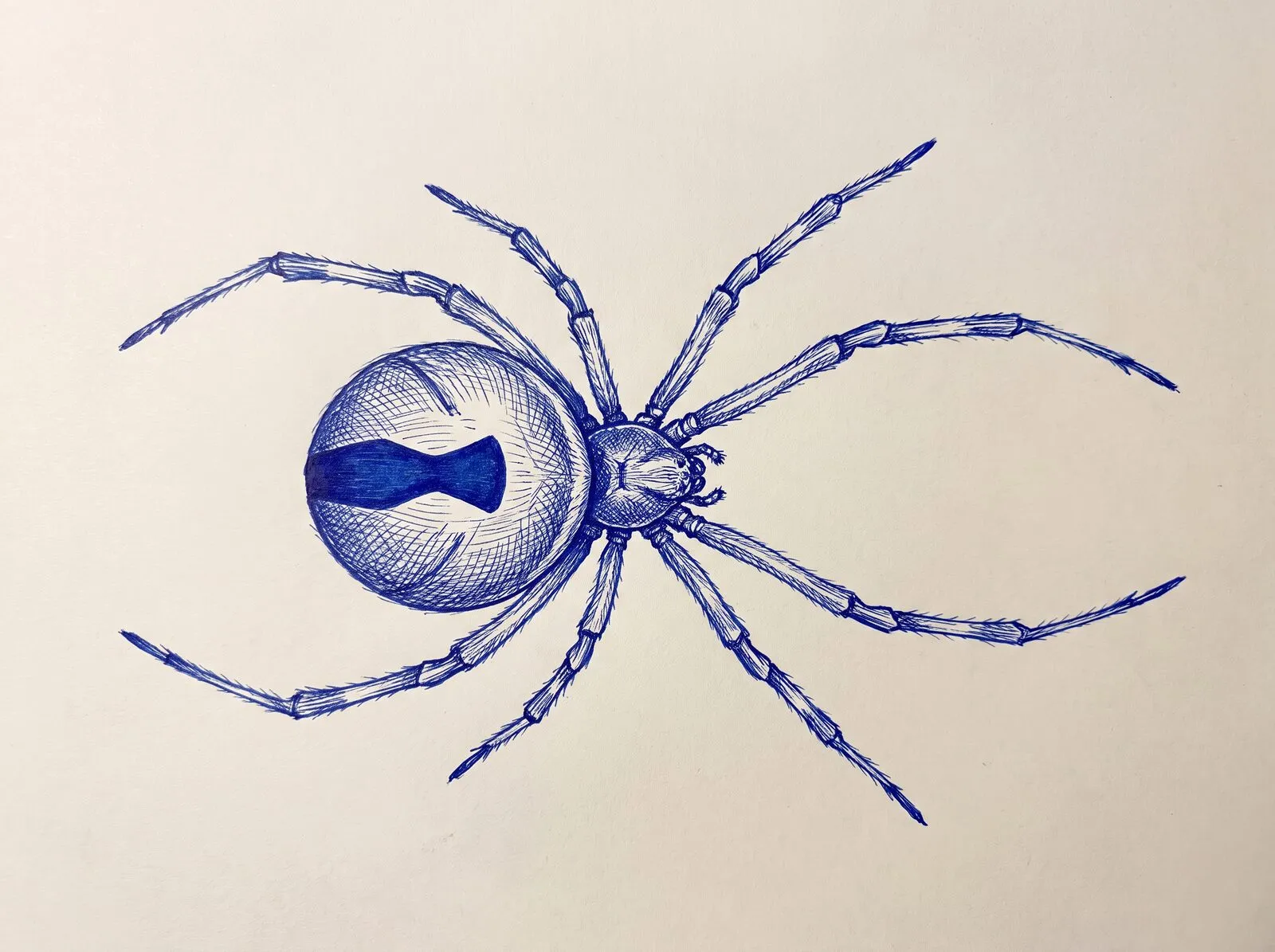
Spiders
Latrodectus hasseltii & web-builders- Identify
- The redback is a pea-sized black spider with a red or orange stripe on the back of the abdomen, in an untidy web low in a dry, sheltered spot. The webbing spiders you notice most, black house and orb weavers, spin around eaves, windows and the garden.
- Lookalike
- Several harmless dark spiders get called redbacks. The red mark is the tell, and if you cannot see it clearly, do not handle the spider to check. Photograph it instead and let someone identify it from the photo.
- The sign
- The web and the round papery egg sacs more than the spider itself. Redback webs are messy and close to the ground in protected, out-of-the-weather spots: under the outdoor table, in the letterbox, among stored gear in the shed.
- In a Hunter house
- They favour dry sheltered nooks: under seats, in sheds and garages, in the fence and the stored boxes. The bush-fringe suburbs on the western edge and the sand-and-bush country around Port Stephens carry more garden and webbing spiders again.
- What fixes it
- Knock down the webbing, treat the sheltered harbourage where they shelter and breed, and clear the stored clutter that shelters them. A residual barrier helps where children and pets use the yard. Identify before you grab.
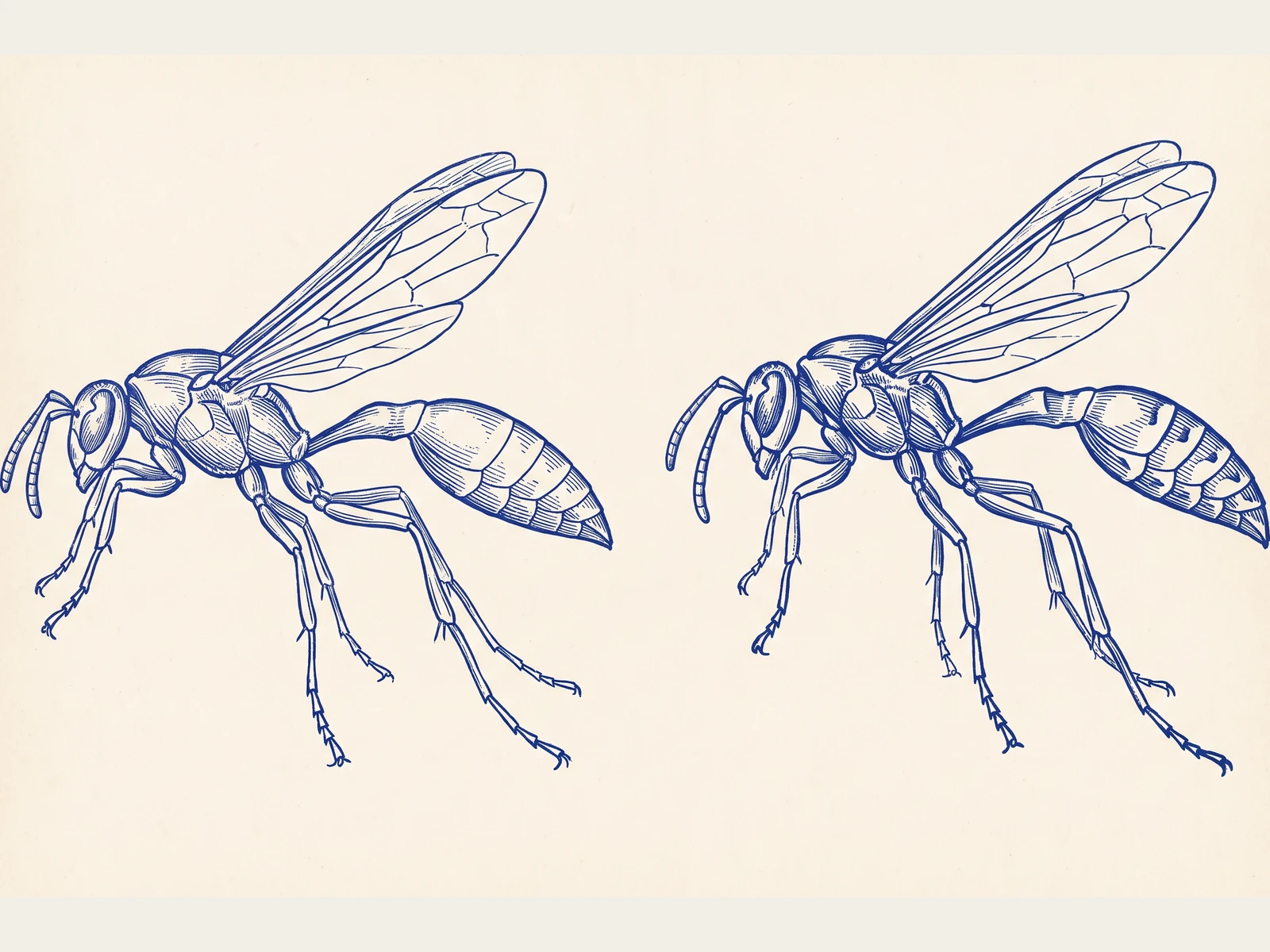
Wasps
Polistes spp. · Vespula germanica- Identify
- Paper wasps are slender with long legs that dangle in flight, and build a small open honeycomb nest under an eave or on a fence. European wasps are stockier, faster and boldly black-and-yellow, nest hidden in a wall cavity or in the ground, and keep returning to a food source.
- Lookalike
- A bee is furry and rounder and does not dangle its legs; a wasp is smooth and waisted. It matters which you have, because bees are protected and relocated while wasps are treated.
- The sign
- A visible papery nest for paper wasps; for European wasps, a steady stream of insects into one point in a wall or a hole in the ground, often with no nest in sight.
- In a Hunter house
- Paper nests appear on eaves and pergolas right through the warm months. A European wasp nest in a wall is the one to treat properly rather than disturb, because a hidden colony can be large.
A disturbed nest defends itself. Knocking it down at dusk with a can of spray is how people get badly stung. If a nest sits near a doorway or where the kids play, or someone at home reacts to stings, leave it alone and book a treatment.
Full treatment: wasps →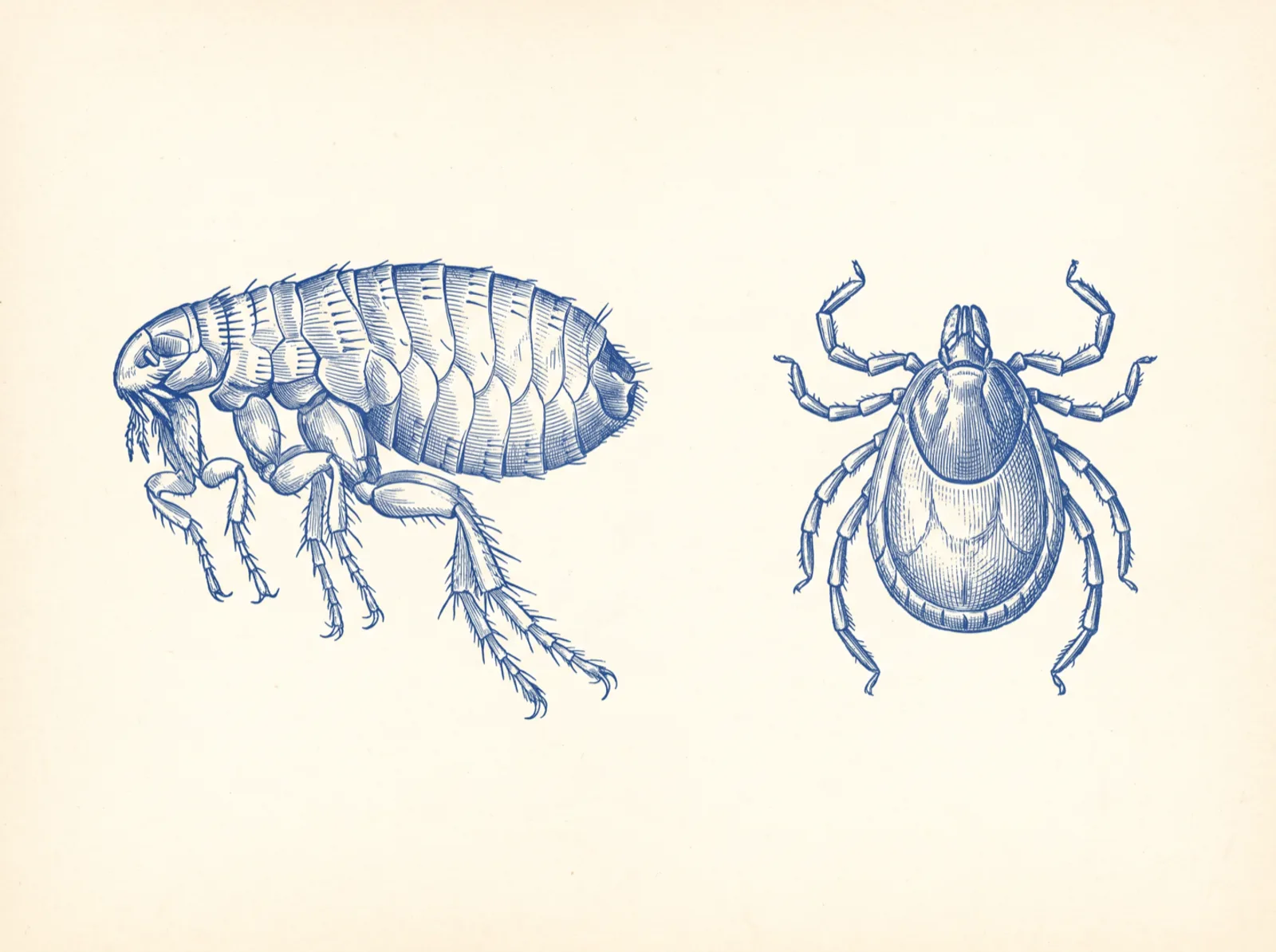
Fleas and ticks
Ctenocephalides spp. · Ixodida- Identify
- A flea is tiny, dark and flattened side-to-side, and jumps rather than flies. A tick is rounded with eight legs and embeds to feed, usually picked up along a shaded yard edge or from bush.
- Lookalike
- Flea bites get confused with bed bugs and mosquitoes. Fleas bite low, around the ankles, in loose clusters; bed bugs bite in lines on skin you slept on; mosquitoes bite exposed skin anywhere. The pattern points you to the right plate.
- The sign
- The pet scratching more than usual; flea dirt, black specks in the bedding that smear rust-red on a wet tissue; bites around your own ankles. The larvae live deep in the carpet, not on the animal.
- In a Hunter house
- The cycle lives in the carpet, floor cracks and shaded yard, which is why treating the pet alone fails and vacuuming matters alongside treatment. Where pets have been kept, an end-of-lease flea treatment is the common ask at handover.
- What fixes it
- Treat the environment, carpet, bedding, subfloor and the shaded yard edge, in step with the pet's own vet treatment, then keep vacuuming to trigger the eggs. It often needs a follow-up visit to catch the next hatch.
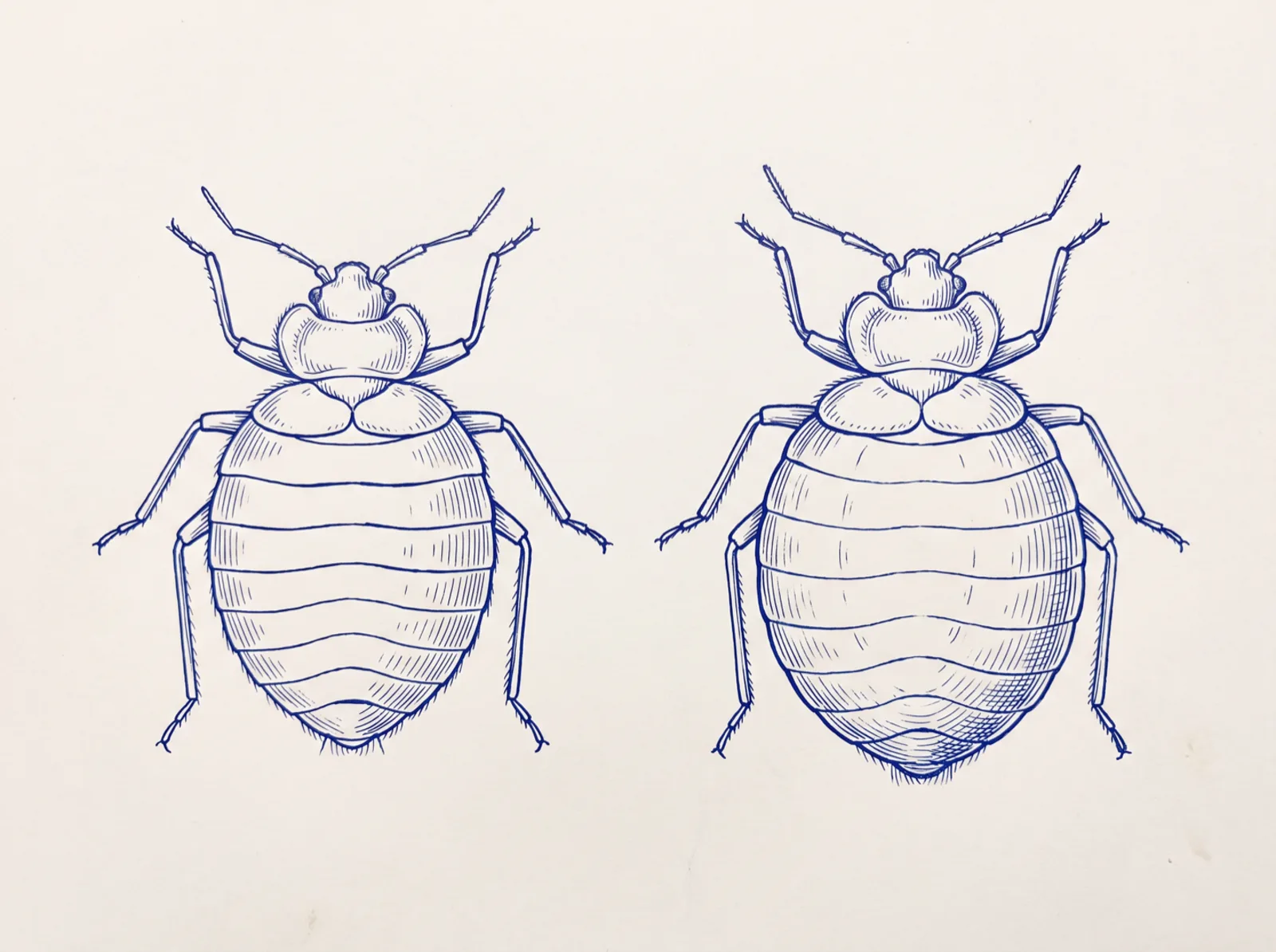
Bed bugs
Cimex lectularius- Identify
- Apple-seed sized, flat, rust-brown and wingless. A fed one is rounder and darker. You rarely see them in daylight, which is part of why they spread before they are found.
- Lookalike
- The bites, a line or cluster on skin exposed while you slept, get mistaken for mosquitoes or a rash. Bites alone never confirm bed bugs; the confirming signs are physical, on the bed itself.
- The sign
- A peppering of dark spots and tiny pale shed skins along the mattress seam, behind the bedhead and in the joins of the base. A heavy infestation carries a sweetish, musty smell.
- In a Hunter house
- They travel in luggage and secondhand furniture, not in dirt, so a holiday stay or a hand-me-down bed base is the usual way one arrives. A clean house is no protection.
- What fixes it
- An inspection-led, multi-visit treatment of the room and its contents, not a single fog. Retail sprays scatter them deeper into the room and make the job harder; one visit is rarely the whole job, and an honest quote says so.
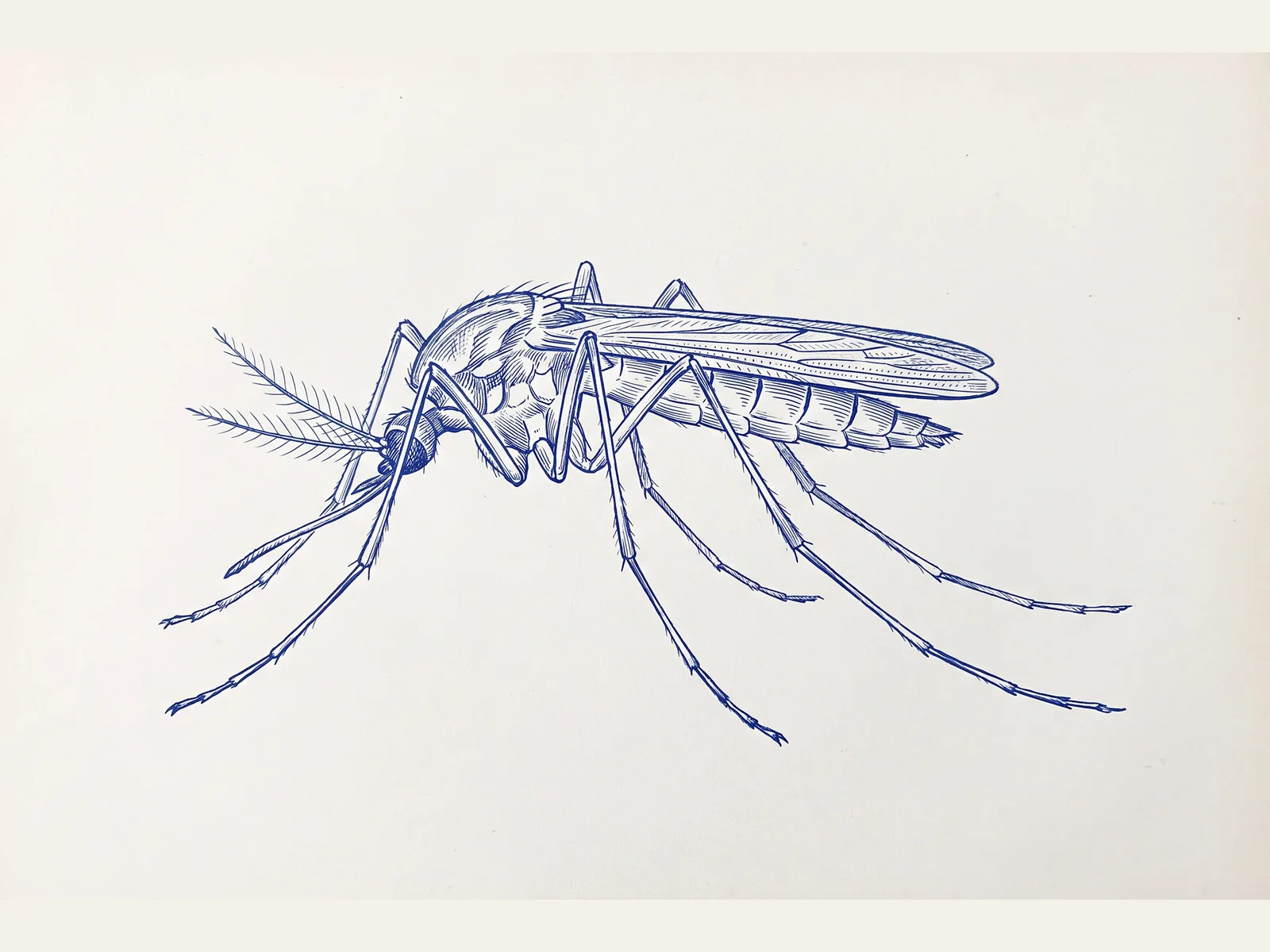
Mosquitoes
Family Culicidae- Identify
- You know the whine and the bites on exposed skin at dawn and dusk. The biters are small and fast and are never far from still water.
- Lookalike
- A slow, leggy crane fly gets called a giant mosquito and worries people, but it does not bite. The mosquitoes doing the biting are the small quick ones.
- The sign
- Bites on exposed skin outdoors around dawn and dusk, and larvae wriggling in any still water within a stone's throw: the pot-plant saucer, the blocked gutter, the forgotten bucket, the pot under the tap.
- In a Hunter house
- They breed in still water within metres of where they bite, and the humid Hunter summer and the pools that sit after rain drive the numbers up. No treatment makes a yard mosquito-proof.
- What fixes it
- Breeding-site reduction comes first: tip out, screen or drain every still-water source. A barrier treatment of the shaded harbourage helps second. The honest limit is that neither one clears a whole neighbourhood.

Termites, and why this plate is different
Every other plate you can act on yourself if you want to. This one you read, then stop, and book. Coastal NSW carries termite activity year-round or close to it, and a working colony is worth more to you left exactly as you found it.
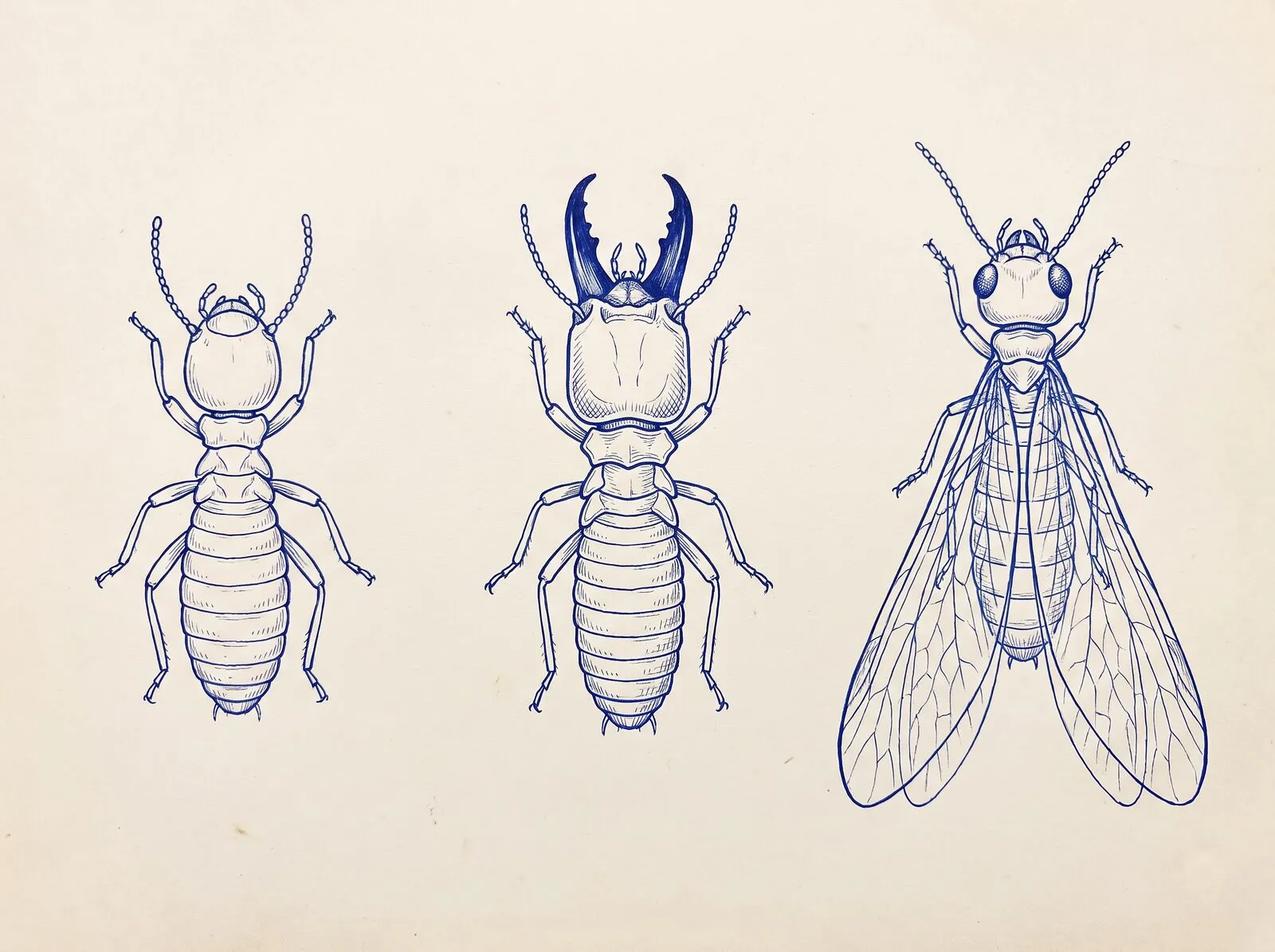
Termites (white ant)
Coptotermes & others- Identify
- You almost never see the termite; you see its work. Pencil-thick mud leads climbing a pier, a slab edge or a wall; skirting or a door frame that sounds hollow when tapped and is papery under the paint; a dusk swarm of equal-winged alates after warm humid weather; a scatter of discarded wings on a windowsill.
- Lookalike
- The dusk swarm is the moment termites, the white ant, get confused with flying ants. A termite alate has a straight thick waist, straight antennae and four wings the same length; a flying ant has a pinched waist, elbowed antennae and unequal wings. The flying ants or termites guide is the quick check.
- Do not disturb it
- If you find active termites or mud leads, leave them exactly as they are. Do not spray them, break a tube open or poke the timber. Disturbing a working colony makes it retreat and re-route through the house, and destroys the evidence a technician reads to trace it. Cover it back over and book an inspection.
- In a Hunter house
- Damp subfloors in the salt band, old timber in the inner-ring Federation stock, and bushland-sourced pressure on the western fringe all raise the odds. There is no honest risk score from the kerb; only a confirmed inspection settles a specific property.
- What fixes it
- A detailed visual inspection first, then management: a non-repellent soil barrier or a baiting-and-monitoring system, chosen by what the inspection finds rather than a brochure. The conducive conditions that invite them, moisture, timber-to-soil contact and mulch against the slab, are the weekend-fixable half.
Found mud leads or hollow-sounding timber? Leave it undisturbed and book a licensed inspection. That is the honest next step, and the only one that does not cost you evidence.
What a guide can and cannot do
A field guide narrows it down. It cannot confirm a species from a description, walk your subfloor, or tell you how bad a problem is without seeing it. That last part is a licensed technician's job, in person, and it is the part this page will never pretend to do for you.
So use the plates to get to the right name and the right next step, then, if you are unsure or the sign points somewhere serious, tell us what you saw through the form. A licensed technician reads every enquiry and comes back with a straight answer and a free quote. The answer is free whether or not you ever book.
If your real clue is a place rather than an animal, a noise in the roof, droppings under the sink, something in the subfloor, start with where to look, which reads the house room by room instead of species by species.
- Australian Museum, Redback Spider, Termites, Black Rat and House Mouse. The reference identification for the specimens these plates lean on, including the field marks that separate the lookalikes.
- NSW EPA, Pesticide licences. Pest treatment around a home is licensed pesticide use in NSW; termite and fumigation work carries a further endorsement. This is the scheme that governs the technicians who do the work.

Tell us what you have seen
A description and a suburb is enough. A licensed technician reads every enquiry, works out what the job needs, and comes back with a straight answer and a free quote. No obligation, no pressure.